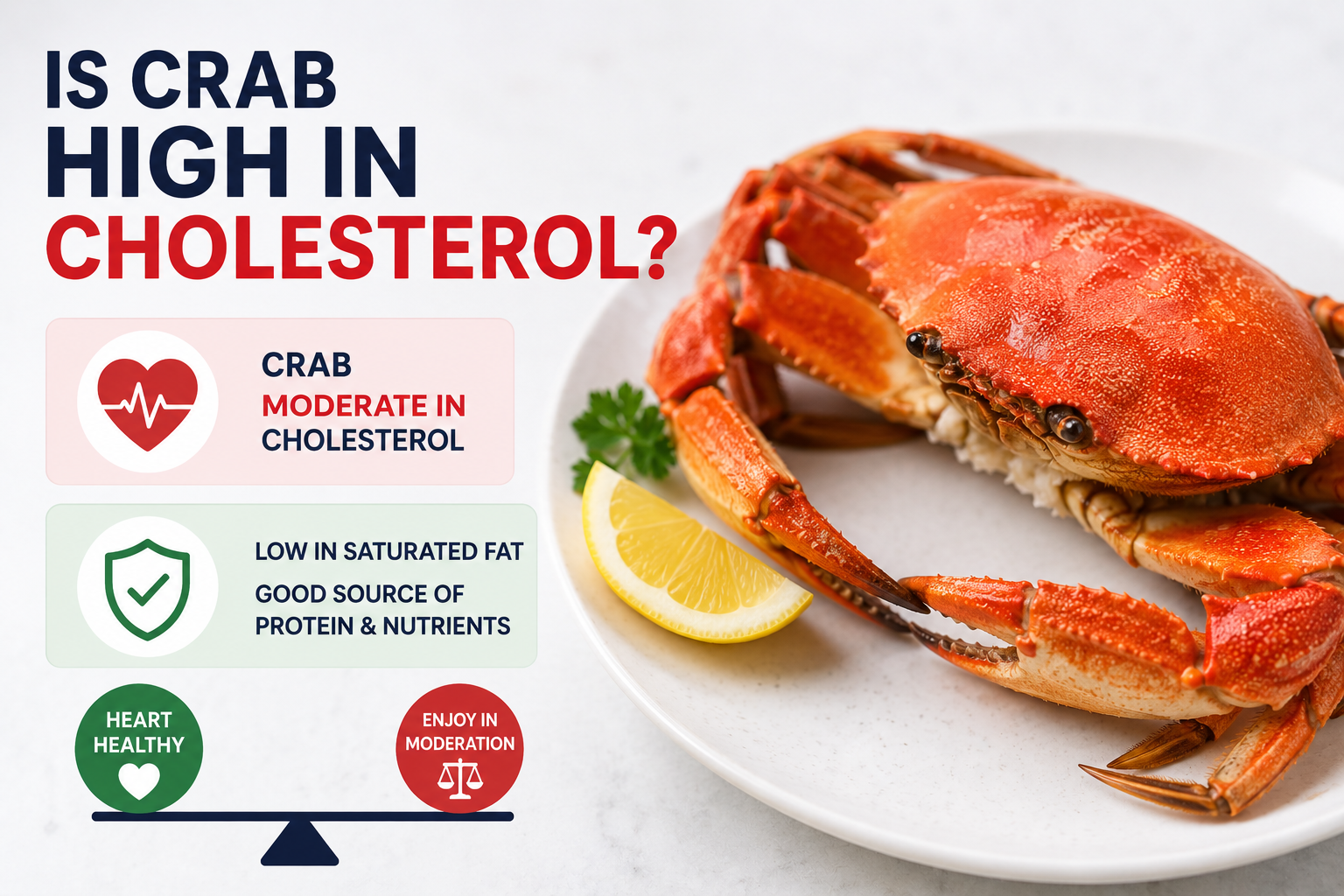
Crab contains a meaningful amount of dietary cholesterol, but its low saturated fat and high protein content make the full nutrition picture more favorable than the cholesterol number alone suggests.
The direct answer: yes, crab contains dietary cholesterol. However, is crab high in cholesterol is not the only question that matters. A plain 3-ounce serving of blue crab has about 95 milligrams of cholesterol in the FDA seafood reference table, yet it has about 1 gram of total fat and no measurable saturated fat in that same serving. For many adults, preparation method, overall eating pattern, LDL level, and portion size matter more than the fact that crab contains cholesterol.
| KEY TAKEAWAYS
· A 3-ounce serving of blue crab provides roughly 95 mg of dietary cholesterol, although the amount varies by species and product. · Plain crab is very low in saturated fat, the type of fat most consistently linked with higher LDL cholesterol. · Fried crab, crab cakes, creamy dips, and melted butter can change a lean seafood choice into a meal high in saturated fat, sodium, and calories. · People with very high LDL cholesterol, familial hypercholesterolemia, cardiovascular disease, or individualized dietary restrictions should ask their clinician or dietitian how often crab fits their plan. · A heart-smart crab meal pairs a moderate serving with vegetables, beans or whole grains, and a sauce based on herbs, citrus, or olive oil rather than butter. |
Is Crab Actually High in Cholesterol?
It is reasonable to describe crab as moderate to moderately high in dietary cholesterol. The FDA seafood nutrition table lists 95 mg of cholesterol in a 3-ounce serving of cooked blue crab. That is more than the amount in the same serving of tuna or salmon, but less than the amount listed for shrimp.
The number is not identical for every crab. Blue crab, Dungeness crab, king crab, canned crab, and imitation crab can differ because they are different foods and may be processed differently. Nutrition labels also reflect the edible portion, not the weight of shells or whole crab legs. When a package has a Nutrition Facts label, use that label for the most relevant number.
The Three-Number Verdict for Plain Blue Crab
| Measure | About 3 oz cooked | Why it matters |
| Dietary cholesterol | 95 mg | A meaningful amount, but not a direct measurement of how much LDL will rise. |
| Saturated fat | 0 g on the FDA table | A major reason plain crab can fit a heart-conscious eating pattern. |
| Protein | 20 g | Helps make crab a nutrient-dense main protein rather than a high-fat side dish. |
Reference values are from the U.S. Food and Drug Administration seafood nutrition table. Product labels and species-specific databases may differ.
Why Can the Cholesterol Number Be Misleading?
Dietary cholesterol is the cholesterol present in food. Blood cholesterol is measured in your bloodstream and includes LDL, HDL, and other lipoproteins. They are related, but they are not interchangeable. Eating a food with 95 mg of cholesterol does not mean 95 mg is added directly to your blood.
People vary in how strongly their blood cholesterol responds to dietary cholesterol. Genetics, overall diet, body weight, metabolic health, medications, and the amount of saturated fat eaten alongside the food all influence the result. This is why current heart-health advice looks at the entire meal and overall dietary pattern rather than judging a food by one nutrient.
What Matters More for LDL Cholesterol?
For most people, saturated fat is a more consistent dietary driver of higher LDL cholesterol than dietary cholesterol alone. The American Heart Association notes that non-fried crab and other shellfish are low in saturated fat and can be a healthier alternative to many cuts of meat or poultry.
The 2025-2030 Dietary Guidelines for Americans recommend keeping saturated fat below 10% of total daily calories. Crab meat itself makes only a small contribution to that limit. Butter, mayonnaise, cheese, cream sauces, coconut-based sauces, and deep-frying oil can contribute much more.
Does Eating Crab Raise Blood Cholesterol?
Crab can contribute dietary cholesterol, but the effect on an individual person’s LDL level cannot be predicted from one serving. A person who eats plain crab in place of fatty sausage, ribs, or a cheeseburger may reduce the saturated fat in that meal. A person who eats crab fried in batter with butter and creamy sides may move in the opposite direction.
Frequency matters too. An occasional crab dinner inside a diet rich in vegetables, fruits, beans, whole grains, nuts, and minimally processed protein foods is different from eating large shellfish portions daily while also consuming a high-saturated-fat diet.
How Does Crab Compare With Other Seafood?
The comparison below uses the FDA seafood reference table for 3-ounce cooked servings. It is useful for perspective, not for labeling one seafood as universally good or bad.
| Seafood | Cholesterol | Saturated fat |
| Blue crab | 95 mg | 0 g |
| Lobster | 60 mg | 0 g |
| Salmon, selected species | 70 mg | 2 g |
| Tuna | 50 mg | 0 g |
| Shrimp | 170 mg | 0 g |
Crab sits in the middle of this group for dietary cholesterol and remains low in saturated fat. Salmon offers more omega-3 fat, while crab is particularly useful as a lean protein source. Variety is generally more practical than trying to identify a single perfect seafood.
Which Crab Dishes Change the Answer?
The word crab on a menu does not guarantee a lean meal. The ingredients around the crab often determine whether the dish supports or works against a cholesterol-lowering plan.
| Crab choice | Heart-health audit |
| Steamed or boiled crab meat | Usually the simplest option. Watch salty seasoning and dipping sauces. |
| Crab legs with melted butter | The crab stays lean, but butter adds saturated fat quickly. |
| Crab cakes | Breadcrumbs, mayonnaise, egg, butter, frying oil, and portion size can change the nutrition profile. |
| Crab dip or crab rangoon | Cream cheese, mayonnaise, wrappers, and frying can make these much higher in saturated fat and calories. |
| Canned crab | Convenient and lean, but sodium varies. Compare labels and drain when appropriate. |
| Imitation crab | Often made from processed white fish with starch, sugar, and sodium. It is not nutritionally identical to real crab. |
Can You Eat Crab If You Have High Cholesterol?
Many people with high cholesterol can include plain crab in moderation. The most useful question is whether crab is replacing a protein higher in saturated fat and whether the rest of the meal supports your LDL goal.
Extra caution may be appropriate if you have familial hypercholesterolemia, very high LDL cholesterol, established cardiovascular disease, diabetes with additional cardiovascular risk, or a clinician-directed limit on dietary cholesterol. In those situations, your full lab profile and medical history matter more than a general serving recommendation.
What Is a Reasonable Portion?
A practical serving of picked crab meat is about 3 to 4 ounces, roughly the size of a deck of cards. Crab legs are harder to estimate because much of their weight is shell. When tracking intake, count the edible meat rather than the total weight served at the table.
Larger portions are not automatically unsafe, but they raise the total cholesterol and sodium consumed in that meal. A moderate portion also leaves room for fiber-rich foods that can support cholesterol management, such as vegetables, beans, lentils, barley, oats, or brown rice.
What About Sodium in Crab?
Crab is naturally more sodium-rich than many fresh proteins, and prepared products can contain substantially more. The FDA table lists 330 mg of sodium in 3 ounces of blue crab. Steaming seasoning, canned brine, restaurant sauces, and packaged crab cakes can increase the total.
Sodium does not directly raise LDL cholesterol, but too much can worsen blood pressure in salt-sensitive people. If you are managing both cholesterol and blood pressure, compare labels, choose minimally seasoned crab, and use lemon, vinegar, garlic, pepper, paprika, parsley, or other herbs for flavor.
How Can You Build a More Heart-Smart Crab Plate?
- Choose plain crab meat that is steamed, boiled, baked, broiled, or grilled rather than breaded and deep-fried.
- Keep the edible crab portion near 3 to 4 ounces, especially when it is one part of a larger meal.
- Add at least half a plate of vegetables and include a fiber-rich carbohydrate such as beans, lentils, barley, oats, or a whole grain.
- Use lemon, herbs, salsa, or a small amount of olive oil instead of relying on melted butter, cream sauce, or mayonnaise-heavy dressing.
When Should You Ask a Dietitian for Individual Guidance?
Consider personalized nutrition advice when your LDL remains high despite treatment, you have familial hypercholesterolemia, you have already had a heart attack or stroke, you take cholesterol-lowering medication, or you are trying to balance several conditions such as diabetes, kidney disease, high blood pressure, and high cholesterol.
A registered dietitian can review the foods you eat most often and identify the changes most likely to matter. For many people, replacing saturated-fat-rich foods and increasing soluble fiber produces a bigger benefit than eliminating occasional plain crab.
Frequently Asked Questions
Is crab meat bad for cholesterol?
Not necessarily. Crab contains dietary cholesterol, but plain crab is low in saturated fat. Its effect depends on portion, preparation, frequency, the rest of your diet, and your personal cholesterol risk.
Is crab healthier than shrimp for cholesterol?
The FDA table lists less dietary cholesterol in blue crab than in shrimp, while both are low in saturated fat. Either can fit a heart-conscious eating pattern when prepared without deep-frying, butter, or creamy sauces.
Are crab cakes high in cholesterol?
They can be. Crab cakes vary widely because recipes may include egg, mayonnaise, butter, breadcrumbs, and frying oil. Check the restaurant or package nutrition information when available.
Is imitation crab lower in cholesterol?
It may contain less cholesterol than some real crab products, but it is often higher in refined starch and sodium. Read the label rather than assuming it is the healthier choice.
Can I eat crab while taking a statin?
There is no general rule that statin users must avoid crab. Continue the eating pattern recommended by your clinician and ask for individualized advice if your LDL remains above target.
Is crab high in saturated fat?
Plain crab is low in saturated fat. The saturated fat usually comes from preparation ingredients such as butter, cream cheese, mayonnaise, cheese, or frying oil.
The Bottom Line
Crab is not cholesterol-free. A 3-ounce serving of blue crab contains about 95 mg of dietary cholesterol in the FDA reference table. Still, plain crab is lean, protein-rich, and very low in saturated fat, so it can fit many heart-conscious diets.
The preparation method changes the answer more than many people realize. Steamed crab with vegetables and whole grains is nutritionally different from fried crab, crab dip, or crab legs covered in butter. Focus on the complete plate, keep portions reasonable, and seek personalized advice when you have very high LDL cholesterol, familial hypercholesterolemia, or cardiovascular disease.
Authoritative Sources and Further Reading
| • U.S. Food and Drug Administration: Nutrition Information for Cooked Seafood |
Medical disclaimer: This article is for general educational purposes and does not replace personalized advice from a physician or registered dietitian. Seek professional guidance for very high cholesterol, familial hypercholesterolemia, cardiovascular disease, or other medical conditions that require an individualized eating plan.