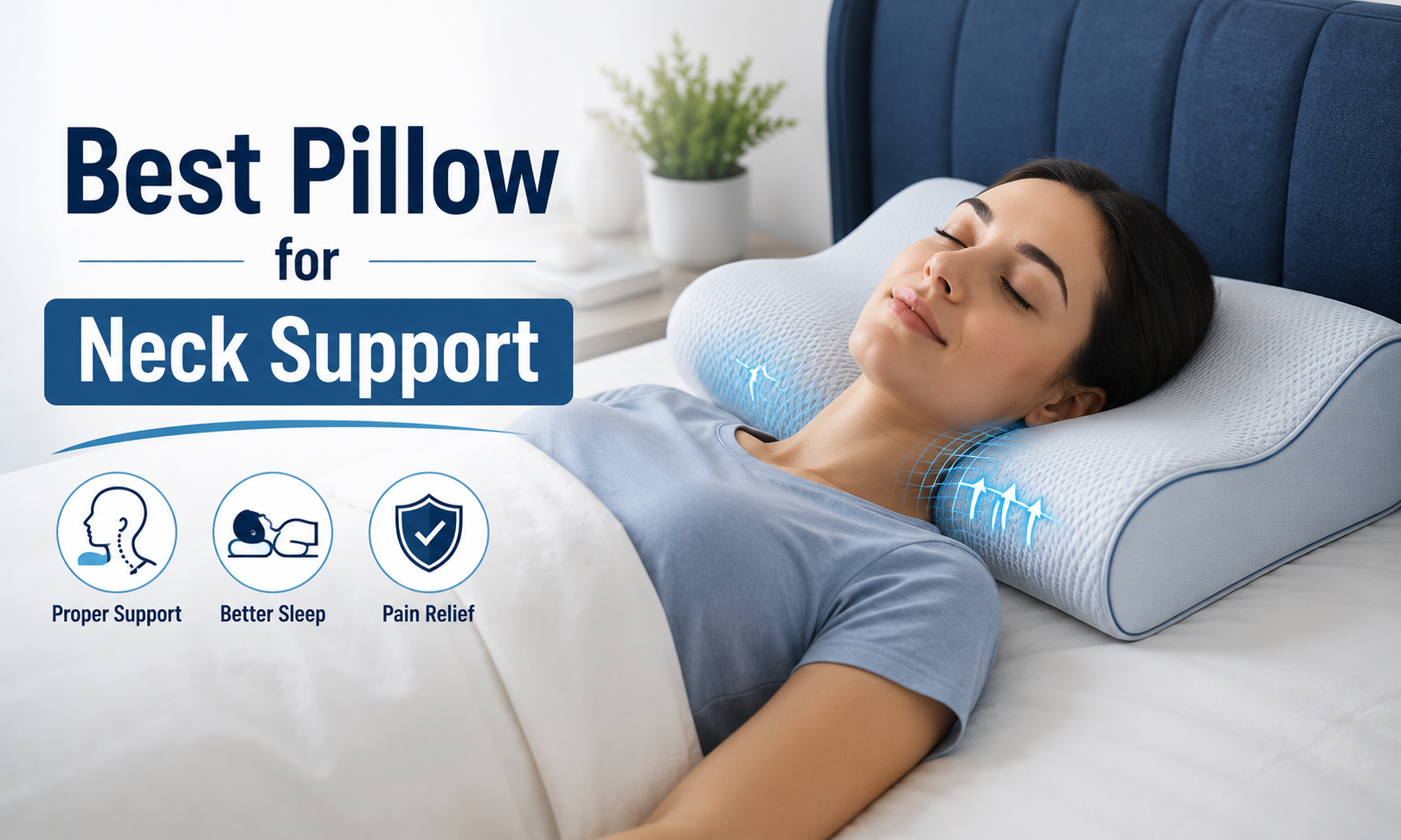
The Best Pillow for Neck Support is not necessarily the softest or most expensive option. It is the one that keeps your head from tipping up, down, or sideways for hours at a time. Here is how to match pillow height and construction to your sleep position, plus current U.S. options worth considering.
Updated for U.S. readers in 2026.
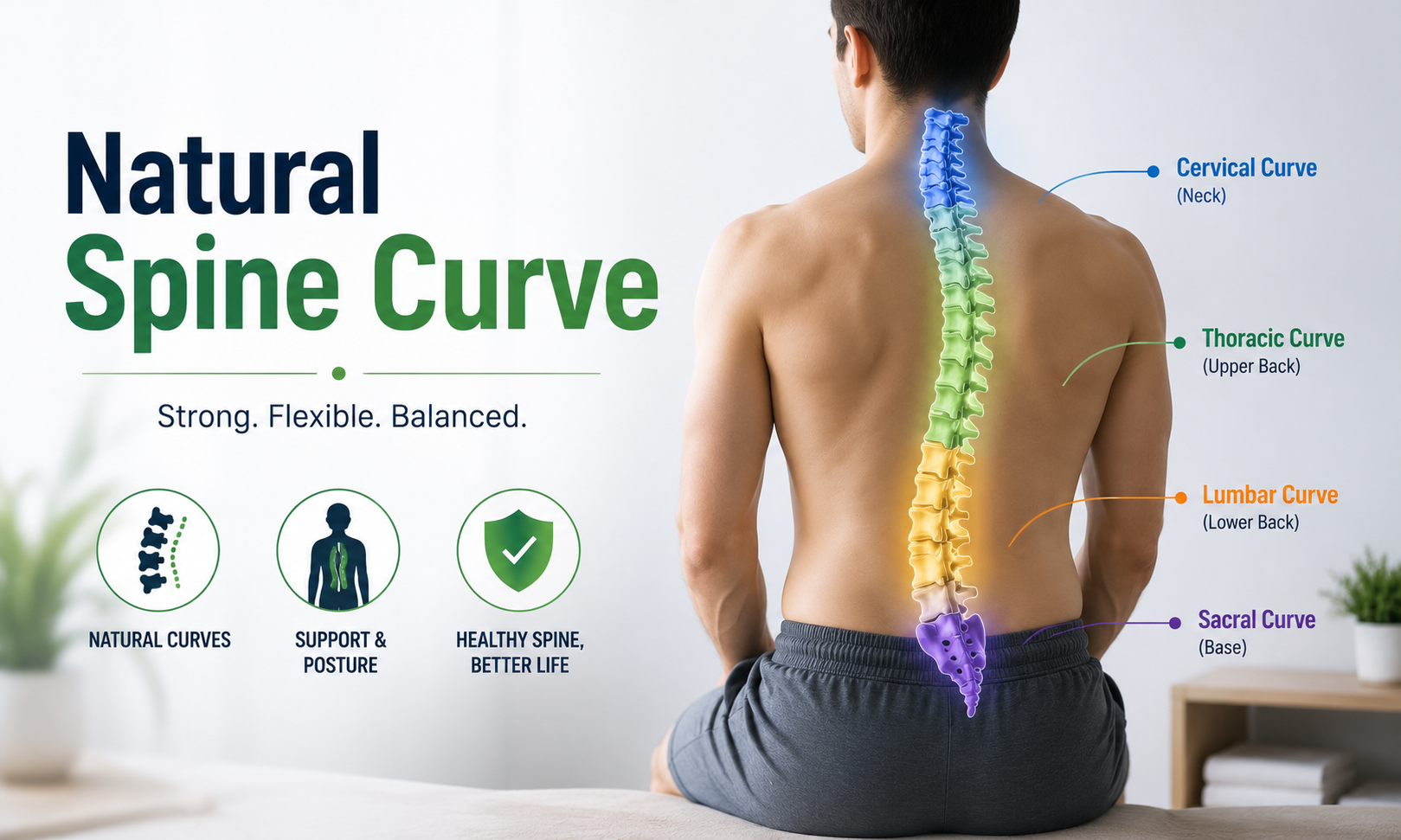
A pillow can feel soft and luxurious and still be wrong for your neck. The real job of a neck-support pillow is less glamorous: it should fill the space between your head, neck, shoulder, and mattress well enough to keep the cervical spine close to a neutral position while you sleep. If the pillow is too tall, too flat, or collapses during the night, the neck can stay bent for hours.
That matters because neck pain is already common among adults who spend much of the day looking at phones, laptops, steering wheels, or workstations. A 2025 systematic review of pillow studies found that pillow characteristics can influence pain, disability, sleep quality, and cervical alignment in people with chronic neck pain, but the evidence base remains relatively small. Read the 2025 systematic review indexed by PubMed.
Key Takeaways
- There is no single pillow height or material that works for every person with neck pain.
- Side sleepers usually need more loft than back sleepers because the pillow must fill the space created by the shoulder.
- Back sleepers generally do best with moderate or lower loft plus enough contouring to support the natural curve of the neck.
- Stomach sleeping puts the neck in prolonged rotation and usually requires a very thin pillow if the position cannot be avoided.
- Adjustable-fill pillows are useful when you are unsure of your ideal loft because you can add or remove material instead of replacing the entire pillow.
- Persistent pain, arm numbness, weakness, fever, unexplained weight loss, severe headache, or symptoms after an accident should be evaluated by a healthcare professional rather than managed only by changing a pillow.
Which pillow type is best for your sleeping position?
Start with position, not brand. Your mattress also changes the calculation: a shoulder sinks farther into a soft mattress than a firm one, so the same side sleeper may need a slightly lower pillow on a softer bed.
| Sleep position | Typical loft need | Helpful pillow features | What to avoid |
| Side | Medium to high | Responsive latex, adjustable fill, gusseted edge, side-sleeper cutout | A flat pillow that lets the head drop toward the mattress |
| Back | Low to medium | Cervical contour, supportive center, gentle neck roll | A very tall pillow that pushes the chin toward the chest |
| Stomach | Very low | Thin, compressible pillow or minimal head elevation | High-loft foam that forces the neck farther into rotation |
| Combination | Adjustable | Removable fill, resilient foam or latex, shape retention | Very rigid shapes that only suit one position |
What should you look for in a pillow for neck support?
How much loft do you actually need?
Loft is the height of the pillow after your head is resting on it. The goal is not to chase a specific number of inches. The useful height depends on shoulder width, head size, mattress firmness, and sleep position.
For a side sleeper, the pillow should fill the gap from the mattress to the side of the head without tilting the nose toward the ceiling or down toward the bed. For a back sleeper, the pillow should support the neck while allowing the face to point mostly upward instead of pushing the chin toward the chest.
Is memory foam or latex better for neck support?
Both can work. Solid or molded memory foam tends to provide close contouring and steady support, which some people like for a more fixed sleep position. Shredded memory foam is more moldable and is often adjustable.
Latex is springier. It tends to push back rather than letting the head sink deeply, and ventilated latex often sleeps cooler than dense memory foam. In practice, shape and loft matter at least as much as the material label.
Do cervical contour pillows really help?
A cervical pillow usually has a lower center for the head and a raised roll or edge under the neck. The design can help some back and side sleepers maintain support without excessive head elevation.
The downside is fit. A contour that matches one person can feel too tall or too firm for another. If you are new to cervical pillows, a design with multiple heights or a trial period can make the adjustment easier.
Why does firmness matter?
A pillow can have the correct height at first and still fail if it collapses too far after several minutes. The best firmness is enough to preserve your chosen loft while still allowing comfortable pressure relief around the head, ear, jaw, and shoulder.
Mayo Clinic advises keeping the head and neck aligned with the body during sleep and using a pillow that supports the neck. See Mayo Clinic neck-pain guidance.
What are the best pillows for neck support in 2026?
The products below are current U.S. examples that illustrate different ways to achieve neck support. They are not medical endorsements, and the best pick depends more on fit than on a ranking. Product designs, prices, and trial policies can change, so confirm details before buying.
1. Saatva Latex Pillow: Best overall for responsive support
Saatva offers its Latex Pillow in Standard and High Loft configurations. The standard version is roughly 4 to 5 inches high, while the high-loft version is roughly 6 to 7 inches. The core uses shredded natural latex with a soft outer layer. That combination gives the pillow some cushion while still providing noticeable rebound. It is especially practical for shoppers who want latex support but dislike the hard feel of a solid molded block.
Best fit: back sleepers using the lower profile, side sleepers using the higher profile, warm sleepers, and people who want a resilient rather than slow-sinking feel.
2. TEMPUR-Neck Pillow: Best classic cervical contour
The TEMPUR-Neck is a shaped foam pillow designed to follow the curve of the head and neck. Its contoured profile makes it a strong option for sleepers who want a defined neck roll rather than loose fill. Because molded cervical pillows are less forgiving than adjustable pillows, size selection matters.
Best fit: dedicated back or side sleepers who already know they like a firm, structured cervical shape.
3. Coop Original Adjustable Pillow: Best adjustable loft
Coop allows users to add or remove its shredded memory-foam and microfiber fill. That makes it easier to fine-tune height after sleeping on the pillow instead of guessing at purchase. In 2026, the Original is also offered in multiple shapes, including classic and neck-friendly cutout or crescent configurations.
Best fit: combination sleepers, first-time neck-support pillow shoppers, and people whose ideal loft changes with mattress firmness or sleep position.
4. Purple Harmony Pillow: Best for cooling with springy support
Purple combines a Talalay latex core with its flexible grid material. The pillow is sold in different height choices, allowing shoppers to match profile more closely to their sleeping position. Latex provides quick response and shape retention, while the open construction is designed to promote airflow.
Best fit: hot sleepers and people who want buoyant support without the slow hug of traditional memory foam.
5. Layla Kapok Pillow: Best soft adjustable option
This pillow blends shredded memory foam with kapok fibers and allows the user to remove fill. The result is softer and more moldable than many solid cervical pillows while still giving the user control over loft. That adjustability is useful if you move between your side and back during the night.
Best fit: sleepers who want a softer surface but do not want a traditional down pillow that compresses too easily.
6. Eli & Elm Side-Sleeper Pillow: Best for broad-shouldered side sleepers
A side-sleeper cutout changes how the pillow meets the shoulder. Instead of forcing the shoulder against a straight pillow edge, the curved shape creates room for it while the surrounding fill supports the head. This can be useful when a conventional rectangle makes it difficult to keep the neck level.
Best fit: committed side sleepers, especially those who repeatedly bunch or fold standard pillows to create enough neck support.
7. Silk & Snow Pillow: Best softer adjustable alternative
Silk & Snow uses a shredded memory-foam core with a softer fiber chamber and lets users change the amount of fill. It provides more of a traditional pillow feel than a rigid cervical contour while still allowing loft adjustment.
Best fit: people who want customizable support but prefer a plush, familiar pillow surface.
Quick comparison of 2026 neck-support pillow options
| Pillow | Construction | Adjustment | Most useful for |
| Saatva Latex | Shredded latex + fiber | Two loft choices / layered design | Responsive support, side/back sleepers |
| TEMPUR-Neck | Molded memory foam contour | Choose pillow size/profile | Structured cervical support |
| Coop Original | Shredded memory foam + microfiber | Add/remove fill | Combination sleepers |
| Purple Harmony | Talalay latex + flexible grid | Multiple height options | Cooling, resilient support |
| Layla Kapok | Shredded foam + kapok | Remove fill | Soft adjustable feel |
| Eli & Elm Side-Sleeper | Shredded fill with shoulder cutout | Adjustable fill | Dedicated side sleepers |
| Silk & Snow | Shredded foam + fiber chamber | Adjustable fill | Plush customizable support |
What is the best pillow for neck support if you sleep on your side?
Side sleeping creates the largest vertical gap between the mattress and the head because the shoulder is underneath you. A medium-to-high loft pillow usually works better than a flat one, but shoulder width and mattress sink are critical. Broad shoulders on a firm mattress often require more loft; a soft mattress that lets the shoulder sink deeply may require less.
A useful at-home check is to have someone look at you from behind after you settle into your usual side-sleeping position. Your nose, chin, and center of the chest should not appear sharply tilted toward or away from the mattress. If your head is falling downward, add loft. If it is pushed upward, reduce loft.
What is the best pillow for back sleepers with neck pain?
Back sleepers need enough support under the neck to preserve the natural cervical curve, but not so much height under the back of the head that the chin is pushed toward the chest. A lower-profile contour pillow or a medium-loft adjustable pillow is often easier to fine-tune than a tall, overstuffed design.
Cleveland Clinic similarly recommends a pillow that keeps the neck parallel to the mattress rather than bent upward or downward. Read Cleveland Clinic guidance on pillow fit and neck alignment.
What if you sleep on your stomach?
Stomach sleeping is the hardest position on the neck because the head must remain rotated to one side for breathing. If changing positions is realistic, side or back sleeping generally makes neutral alignment easier. If you continue to sleep on your stomach, a very thin pillow or minimal head elevation usually produces less extension and rotation than a tall pillow.
Does the advice change if you have arthritis, a pinched nerve, or prior neck surgery?
It can. Rheumatoid arthritis, cervical spondylosis, spinal stenosis, disc disease, radiculopathy, and a history of cervical surgery can change what feels safe and comfortable. A pillow that helps ordinary muscular stiffness may be inappropriate after surgery or when instability, nerve compression, or severe degenerative disease is present.
If a surgeon or physical therapist has given you positioning precautions, those instructions take priority over general pillow advice. People with inflammatory arthritis involving the upper cervical spine should also discuss persistent or unusual neck symptoms with their rheumatology team rather than experimenting aggressively with forceful neck positioning.
How can you tell if a new pillow is actually helping your neck?
- Judge morning symptoms, not only how soft the pillow feels when you first lie down.
- Give your body several nights to adapt unless pain clearly worsens or neurologic symptoms appear.
- Track stiffness, headache frequency, shoulder or arm symptoms, and how often you wake to reposition the pillow.
- If you constantly fold, bunch, or place a hand under the pillow, the loft is probably not matching your body.
- If your chin is pushed toward your chest on your back, remove height. If your head drops toward the mattress on your side, add height.
- Use return or trial policies when possible, since pillow fit is unusually personal.
When is neck pain more than a pillow problem?
A new pillow is reasonable for ordinary morning stiffness or mild mechanical discomfort, but certain symptoms deserve medical evaluation. Seek urgent care for severe neck pain after an accident, new weakness, loss of coordination, bowel or bladder changes, or symptoms that suggest a serious neurologic problem. Contact a healthcare professional for neck pain accompanied by fever, unexplained weight loss, persistent numbness or tingling, significant headache or dizziness, or pain that does not improve.
Frequently Asked Questions
Is a hard pillow better for neck pain?
Not necessarily. A pillow needs enough structure to prevent collapse, but excessive firmness can create pressure at the ear, jaw, or back of the head. Support and correct loft matter more than choosing the hardest pillow available.
Is a cervical pillow better than a regular pillow?
It can be for some people, especially back sleepers who benefit from a defined neck roll. Adjustable conventional pillows can work just as well when they are set to the right height. There is no cervical shape proven to be best for everyone.
How many pillows should you use for neck pain?
Usually one well-fitted head pillow is easier to control than stacking several pillows. Multiple head pillows can push the neck into flexion. Separate pillows under the knees or between the knees may improve overall spinal comfort without increasing head height.
Should your shoulders be on the pillow?
For most standard head pillows, the head and neck are the main areas supported. Side sleepers may bring the pillow edge close to the shoulder, while some specialty cutout pillows are intentionally shaped around it. The exact placement should keep the neck aligned rather than forcing the shoulder into an awkward position.
How often should you replace a pillow?
Replace it when it no longer returns to its intended shape, develops permanent lumps or sagging, or cannot maintain the loft you need. Material durability varies, so there is no universal replacement interval that applies to every pillow.
Can the wrong pillow cause headaches?
Poor overnight neck positioning can contribute to morning neck stiffness and may aggravate some headaches that originate from the neck. Recurrent or severe headaches still warrant proper evaluation because many other causes are possible.
So, what is the best pillow for neck support in 2026?
For most shoppers, the safest starting point is an adjustable or multi-loft pillow that lets you correct the height after a few nights. Side sleepers usually need a taller profile, back sleepers need moderate or lower loft with neck contouring, and stomach sleepers need the least height. Latex, memory foam, and hybrid fills can all work when the pillow keeps the head centered over the spine and does not collapse overnight.
Among current U.S. options, the Saatva Latex Pillow is a strong all-around choice for responsive support, the TEMPUR-Neck suits sleepers who prefer a structured cervical contour, and the Coop Original is especially practical if you want to fine-tune loft yourself. The most expensive pillow is not automatically the best one. The better purchase is the model whose height, firmness, and shape match your body and usual sleeping position.
Medical Note
This article is for general educational purposes and does not diagnose or treat neck pain. If pain is persistent, severe, follows an injury, or occurs with weakness, numbness, coordination problems, fever, unexplained weight loss, or other concerning symptoms, seek medical advice.
Editorial Method
This 2026 update was developed for U.S. readers using current clinical guidance, a 2025 systematic review of pillow interventions for chronic neck pain, current manufacturer specifications, and 2026 independent sleep-product testing. Product inclusion reflects design features relevant to alignment and adjustability, not paid medical endorsement.