A U.S.-focused explanation of online schizophrenia tests, paranoid symptoms, clinical diagnosis, look-alike conditions, and when to seek professional help.
| Important: An online test cannot diagnose schizophrenia or determine whether someone has a specific psychotic disorder. A diagnosis requires a clinician to evaluate symptoms, timing, functioning, medical causes, medications, and substance use. |
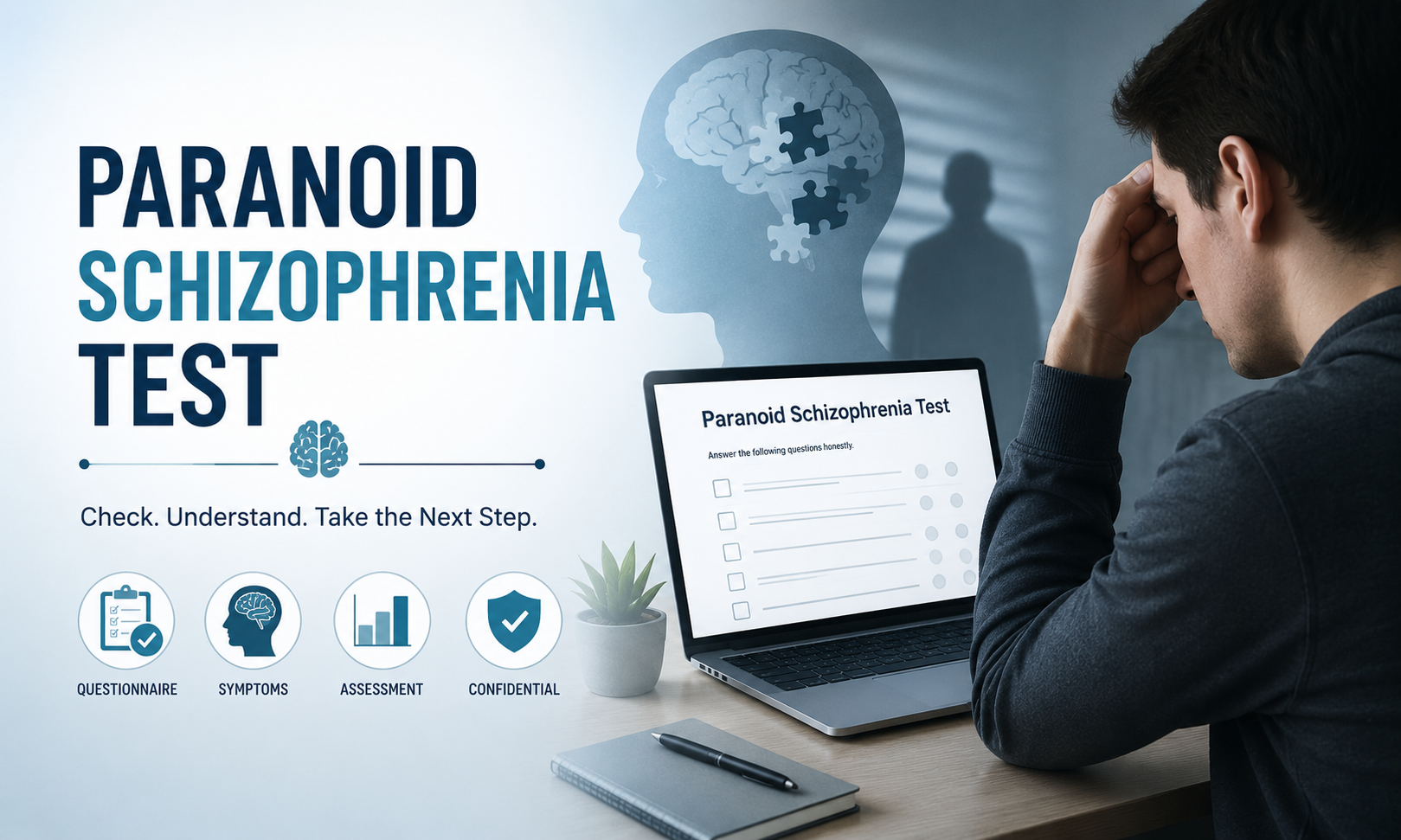
Searching for a Paranoid Schizophrenia Test usually means one of two things: you are worried that suspicious or fearful thoughts may be more than anxiety, or you are trying to understand changes in someone you care about. The first thing to know is that there is no single blood test, brain scan, questionnaire, or online quiz that can confirm schizophrenia.
There is also a terminology update that matters. In current U.S. psychiatric practice, “paranoid schizophrenia” is not treated as a separate schizophrenia subtype. The older subtype labels were removed from the DSM because they were not stable or reliable enough for modern diagnosis. A person may still have schizophrenia with prominent persecutory or paranoid delusions, but clinicians focus on the full pattern of symptoms rather than assigning a “paranoid type” label.
That distinction is important for searchers because paranoia by itself does not equal schizophrenia. Suspiciousness can occur with severe anxiety, trauma-related conditions, mood disorders, sleep deprivation, substance use, medication effects, delusional disorder, neurological illness, and other conditions. The purpose of screening is to identify whether a professional evaluation may be warranted, not to label the cause.
Key Takeaways
- There is no definitive online “paranoid schizophrenia test.” Screening questions can flag concerning symptoms, but they cannot establish a diagnosis.
- “Paranoid schizophrenia” is an older term. In 2026 U.S. clinical practice, schizophrenia is diagnosed as one disorder, while features such as persecutory delusions are described separately.
- Schizophrenia diagnosis depends on a broader pattern that can include delusions, hallucinations, disorganized speech, disorganized behavior, negative symptoms, functional decline, and a required duration of illness.
- Blood tests, toxicology testing, neurological exams, CT scans, or MRI scans may be used when appropriate to look for other causes. None of these tests by itself confirms schizophrenia.
- A first episode of psychosis deserves timely professional assessment. Early treatment is associated with better functioning and recovery-oriented care.
Is There Really a Paranoid Schizophrenia Test?
Not in the way people usually mean the word “test.” A cholesterol test can produce a lab value. A strep test can identify an infection. Schizophrenia is different. It is diagnosed clinically by putting together the person’s reported experiences, observed behavior, history, functional changes, duration of symptoms, and possible alternative explanations.
A self-assessment can still have value. It may help someone notice patterns that deserve attention, especially when symptoms have been persistent or are affecting work, school, relationships, sleep, safety, or self-care. But a high score on an online questionnaire should be interpreted as a reason to seek evaluation, not as proof that schizophrenia is present.
The reverse is also true. A low score does not reliably rule out a psychotic disorder. People may interpret questions differently, may not recognize changes in their own thinking, or may have symptoms that a short screening tool does not capture.
Why Is “Paranoid Schizophrenia” an Outdated Diagnosis?
Older diagnostic systems divided schizophrenia into subtypes such as paranoid, disorganized, catatonic, undifferentiated, and residual. That approach was dropped in DSM-5 and remains absent from DSM-5-TR. U.S. clinicians now diagnose schizophrenia based on core criteria and then describe which symptoms are prominent and how severe they are.
Paranoia remains clinically important. Persecutory delusions, for example, can involve a fixed belief that another person, organization, or group intends to harm, follow, spy on, control, poison, frame, or otherwise target the individual. The belief is evaluated in context, including whether there is realistic evidence, whether it is culturally understandable, how firmly it is held, and whether other psychotic symptoms are present.
For a current U.S. clinical overview, see the American Psychiatric Association’s schizophrenia resource.
What Might an Online Schizophrenia Screening Ask About?
Most screening tools do not ask only about paranoia. They look for a wider group of experiences that can appear in psychosis or schizophrenia. A screening questionnaire may ask whether you have recently experienced:
- Hearing voices or sounds that other people do not appear to hear.
- Seeing, feeling, or sensing things that others do not perceive.
- Strong beliefs that others are monitoring, plotting against, controlling, or communicating special messages to you.
- Difficulty organizing thoughts or speech in a way other people can follow.
- A marked drop in motivation, emotional expression, social interest, or everyday functioning.
- Increasing withdrawal from family, friends, school, or work.
- Trouble distinguishing an internal experience from something happening in the outside world.
- Behavior that has become unusually disorganized or difficult for others to understand.
None of these experiences is specific to schizophrenia. The clinical question is not simply whether one symptom exists. It is how the symptoms fit together, how long they have been present, how severe they are, whether functioning has changed, and whether another condition explains them better.
How Can You Tell Normal Suspicion From a Possible Delusion?
Everyone can become suspicious, especially after a conflict, betrayal, frightening event, or period of intense stress. Clinicians look at several features before considering a belief potentially delusional.
| Question clinicians consider | More consistent with ordinary suspicion | More concerning for a possible delusion |
| Is there evidence? | Concern changes when new evidence appears. | Belief stays fixed despite strong contradictory evidence. |
| How certain is the person? | Allows doubt or alternative explanations. | Feels completely certain and cannot consider another explanation. |
| How broad is the belief? | Usually tied to a specific situation or person. | May expand into a larger system of surveillance, control, persecution, or hidden messages. |
| Does it impair daily life? | Distress is temporary and functioning is mostly preserved. | Fear or preoccupation disrupts sleep, work, school, relationships, self-care, or safety. |
| Are other symptoms present? | No hallucinations or major disorganization. | May occur with hallucinations, disorganized thinking, marked withdrawal, or negative symptoms. |
This comparison is not a do-it-yourself diagnostic checklist. Real threats, stalking, abuse, discrimination, coercive control, and unsafe environments can also produce intense fear. A clinician should not assume that a person’s safety concern is psychiatric simply because it sounds unusual.
How Do U.S. Clinicians Diagnose Schizophrenia in 2026?
A schizophrenia evaluation is broader than a symptom quiz. The clinician typically reviews the onset and course of symptoms, medical and psychiatric history, family history, substance use, prescribed and nonprescribed medications, sleep, mood episodes, trauma history, neurological symptoms, and the person’s level of functioning.
Current diagnostic criteria center on five symptom domains:
- Disorganized speech.
- Grossly disorganized or catatonic behavior.
- Negative symptoms, such as reduced emotional expression or markedly reduced motivation.
For schizophrenia, the pattern must include at least two core symptoms during the active phase, with at least one being delusions, hallucinations, or disorganized speech. There must also be a meaningful decline in functioning, and continuous signs of the disorder must persist for at least six months, including an active phase that usually lasts at least one month unless treatment shortens it. Clinicians must also exclude mood disorders with psychotic features, substance- or medication-induced psychosis, and medical or neurological causes.
The National Institute of Mental Health notes that schizophrenia often first becomes apparent after a first episode of psychosis and that earlier connection to care can improve long-term functioning.
What Happens During a Professional Evaluation?
The exact workup varies from person to person. A psychiatrist, primary care clinician, emergency clinician, psychologist, or another qualified mental health professional may be involved depending on the setting.
- Detailed interview: The clinician asks what has changed, when symptoms started, how often they occur, how convinced the person feels about unusual beliefs, whether hallucinations are present, and how daily life has been affected.
- Mental status examination: The clinician observes speech, thought organization, attention, memory, emotional expression, insight, behavior, and whether the person appears to be responding to experiences that others cannot perceive.
- Medical and medication review: This can include recent illnesses, head injury, seizures, endocrine problems, new medications, supplements, intoxication, withdrawal, or exposure to substances that can trigger psychosis.
- Collateral history when appropriate: With consent, information from family or someone close to the person can help clarify changes in sleep, behavior, functioning, self-care, or safety that developed over time.
- Targeted testing: A clinician may order laboratory tests, toxicology testing, neurological evaluation, or brain imaging if the history or examination suggests a medical or substance-related cause.
Can Blood Tests, MRI, or CT Scans Diagnose Schizophrenia?
No. There is currently no routine laboratory marker or imaging scan that can confirm schizophrenia in an individual patient. Blood tests and imaging can still be important because psychotic symptoms can sometimes be caused or worsened by another medical condition, medication, intoxication, or withdrawal.
Depending on the situation, testing may be used to investigate issues such as:
- Thyroid or other metabolic problems.
- Electrolyte abnormalities or nutritional deficiencies.
- Medication effects or drug exposure.
- Neurological disease, seizure disorders, infection, or structural brain problems when clinically suspected.
- Delirium or another acute medical state.
A normal MRI does not rule out schizophrenia, and an abnormal test does not automatically mean schizophrenia is present. The purpose of medical testing is usually to find or exclude other explanations.
What Conditions Can Look Like “Paranoid Schizophrenia”?
Paranoia and psychosis are symptoms, not a diagnosis by themselves. Several conditions can overlap with schizophrenia, which is one reason self-testing has clear limits.
| Possible explanation | Why it can look similar | What helps distinguish it |
| Bipolar disorder with psychotic features | Mania or severe depression can include delusions or hallucinations. | Clinicians look closely at whether psychosis occurs only during major mood episodes. |
| Major depression with psychotic features | Severe depression can include fixed false beliefs or hallucinations. | Psychosis is evaluated in relation to the depressive episode. |
| Schizoaffective disorder | Combines psychosis with major mood episodes. | Timing and proportion of mood symptoms versus psychosis are central to diagnosis. |
| Delusional disorder | A person can have persistent persecutory beliefs. | Other hallmark schizophrenia symptoms and major disorganization may be absent. |
| Brief psychotic or schizophreniform disorder | Symptoms can resemble schizophrenia. | Duration is shorter than the six-month course required for schizophrenia. |
| PTSD or severe trauma reactions | Hypervigilance, flashbacks, fear, and mistrust can feel intensely real. | Symptoms are interpreted in the context of trauma exposure and the broader PTSD pattern. |
| Substance- or medication-induced psychosis | Cannabis, stimulants, hallucinogens, some medications, and withdrawal states can produce paranoia or hallucinations. | Timing in relation to substance or medication exposure is critical. |
| Medical or neurological illness | Some conditions can cause confusion, unusual beliefs, or hallucinations. | Physical examination, neurological findings, labs, imaging, and the pattern of onset help identify the cause. |
Does Paranoia Alone Mean Schizophrenia?
No. Suspiciousness is common across many situations and conditions, and it can exist without psychosis. Even a persecutory delusion does not automatically mean schizophrenia. A clinician must consider the rest of the symptom picture and the duration of illness.
For example, someone with a fixed persecutory belief but relatively preserved functioning and no prominent hallucinations or disorganized speech may be evaluated for delusional disorder. Someone whose paranoia began during a manic episode may be evaluated for bipolar disorder with psychotic features. Someone with recent stimulant use may need assessment for substance-induced psychosis. These distinctions matter because treatment and prognosis can differ.
What Should You Do After Taking an Online Test?
Treat the result as a prompt for the next step, not as a diagnosis. A useful approach is to document what is happening in concrete terms before an appointment.
- Write down when the concerning experiences started and whether they are becoming more frequent or intense.
- Note changes in sleep, school, work, relationships, appetite, hygiene, motivation, and ability to manage daily responsibilities.
- List prescription drugs, over-the-counter medicines, supplements, cannabis, alcohol, stimulants, hallucinogens, and any other substances used recently.
- Describe any voices, visions, unusual sensations, or strongly held beliefs in your own words without trying to force them into a diagnosis.
- If possible, ask a trusted person to note changes they have observed, especially if those changes developed gradually.
A primary care clinician can be a reasonable entry point, but persistent hallucinations, delusions, disorganization, or a first episode of psychosis often warrant evaluation by a mental health professional with experience in psychotic disorders.
Why Does Early Assessment Matter?
Psychotic symptoms can be frightening and disruptive, but they are treatable. In the United States, early-psychosis programs often use coordinated specialty care, a team-based approach that can combine medication management, psychotherapy, family education, supported employment or education, and case management.
The goal is not simply to suppress symptoms. Modern early-intervention care is designed to help the person return to school, work, relationships, and independent daily life as much as possible. Waiting for symptoms to become extreme before seeking care can make recovery harder.
People in the U.S. can also search for specialized first-episode psychosis services through the SAMHSA Early Serious Mental Illness Treatment Locator.
When Is Urgent Help Appropriate?
Urgent evaluation is appropriate when psychotic symptoms are creating an immediate safety concern or when the person can no longer care for basic needs. Examples include:
- Thoughts, plans, or commands to harm yourself or another person.
- Severe agitation, aggression, or behavior that is rapidly becoming unsafe.
- Not eating, drinking, sleeping, or taking essential medication because of a fixed belief or hallucination.
- Extreme confusion or a sudden change in mental state, especially with fever, seizure, head injury, intoxication, or other physical symptoms.
- Being unable to find shelter, stay oriented, or complete basic self-care because of psychosis.
In the United States, call or text 988 for the Suicide & Crisis Lifeline when immediate mental health support is needed. Call 911 or go to an emergency department for a life-threatening emergency.
How Accurate Are Online Schizophrenia Tests?
Their accuracy depends on what the tool was designed to do. A short self-assessment can identify experiences that overlap with psychosis, but it cannot reliably determine the cause. Screening is most useful when it raises a question that is then explored in a clinical interview.
Online tools also have built-in limitations. People differ in how they interpret questions, insight can change during psychosis, and a short questionnaire cannot evaluate context, culture, medical history, substance exposure, functional decline, or the exact relationship between psychosis and mood episodes.
For that reason, the most meaningful “test” is not a single score. It is a careful assessment over time by a qualified clinician who can separate schizophrenia from other psychiatric and medical conditions.
Questions People Commonly Ask
Can you have schizophrenia without hallucinations?
Yes. Hallucinations are common but not mandatory in every presentation. A diagnosis depends on the overall symptom pattern, and at least one core active-phase symptom must be delusions, hallucinations, or disorganized speech.
Can severe anxiety cause paranoia?
Anxiety can cause intense worry, threat monitoring, and mistrust, but those experiences are not automatically psychotic. The degree of conviction, reality testing, associated symptoms, and functional impact help a clinician distinguish anxiety-driven fears from delusional beliefs.
Can cannabis cause paranoid thoughts or psychosis?
Yes. Cannabis can be associated with paranoia and, in some people, psychotic symptoms. Heavy use, high-potency products, younger age, and personal vulnerability can increase concern. A clinician will look closely at timing and whether symptoms continue after intoxication has resolved.
Can schizophrenia start suddenly?
A dramatic first episode can seem sudden, but many people have subtler changes beforehand, such as social withdrawal, sleep disruption, reduced motivation, unusual thinking, or declining school or work performance. Some other psychotic disorders can have a more abrupt onset.
What age does schizophrenia usually begin?
Schizophrenia is commonly diagnosed from the late teens through the early thirties, although onset can occur outside that range. New psychosis at an unusually young or older age increases the importance of carefully checking medical, neurological, medication, and substance-related causes.
Should family members confront a paranoid belief?
Directly arguing about a fixed belief can increase distress or mistrust. It is usually more helpful to stay calm, acknowledge the person’s fear without agreeing that the belief is true, focus on safety, and encourage professional evaluation.
The Bottom Line
A “paranoid schizophrenia test” can be a starting point, but it cannot tell you whether you have schizophrenia. In 2026, U.S. clinicians do not diagnose a separate paranoid subtype. They evaluate the full pattern of psychotic, cognitive, behavioral, and negative symptoms, how long the changes have lasted, how they affect daily functioning, and whether another medical, substance-related, trauma-related, or mood condition explains them better.
If paranoia, hallucinations, disorganized thinking, or major functional decline is persistent or escalating, the safest next step is a professional mental health evaluation rather than repeating online quizzes. A timely assessment can clarify what is happening and connect the person with treatment that fits the actual cause.