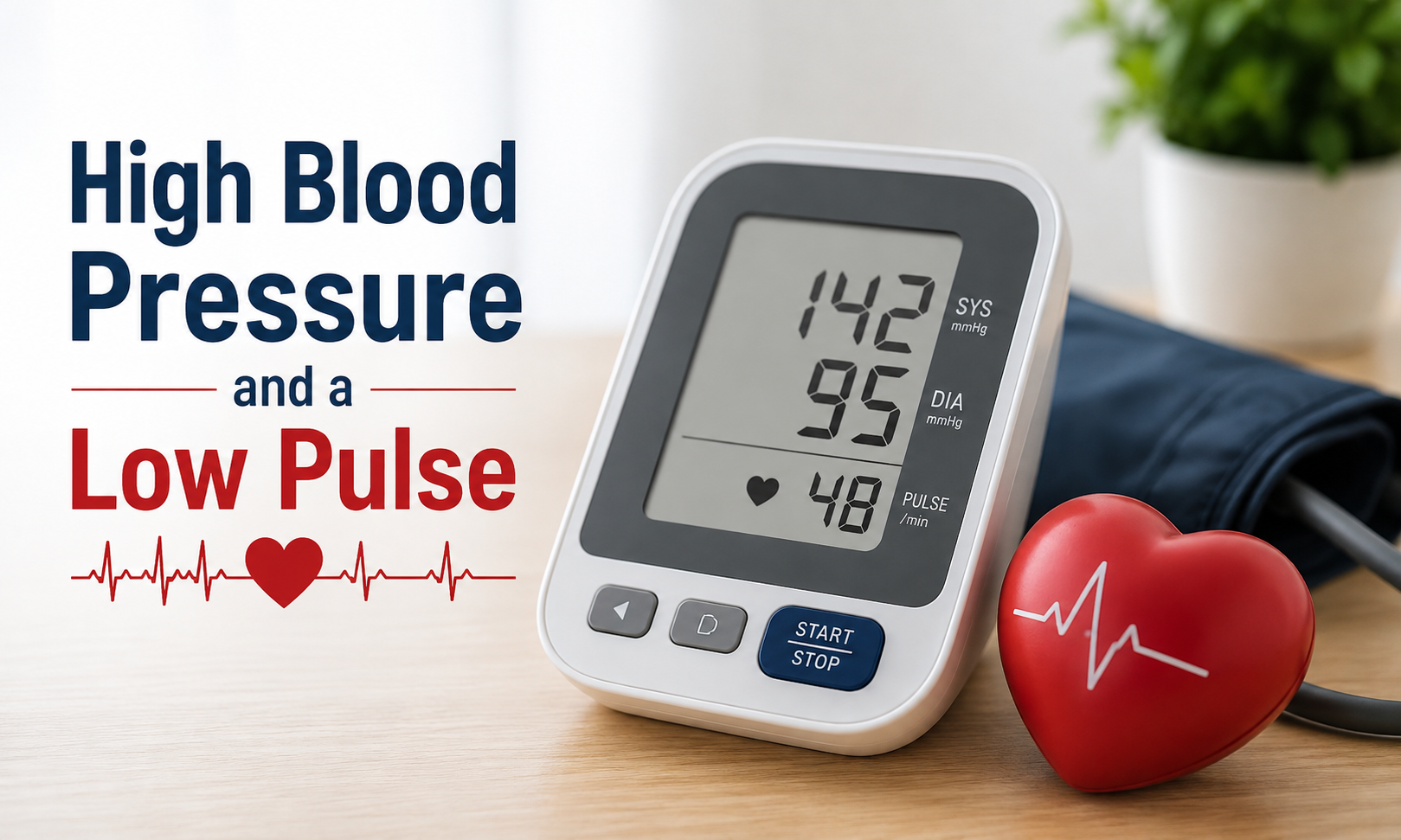
A high blood pressure reading and a slow heart rate can occur at the same time for very different reasons. When someone has High Blood Pressure and a Low Pulse, the safest interpretation depends on symptoms, medications, repeat readings, and whether the slow pulse is normal for that person.
Blood pressure and pulse are often displayed side by side, so it is easy to assume they rise and fall together. They do not.
Blood pressure measures the force of blood against artery walls. Pulse measures how many times the heart beats each minute. A person can have high blood pressure while the heart rate is slow because the two numbers are controlled by overlapping but separate systems.
Sometimes that combination is expected, such as in a physically fit person or someone taking a beta blocker. In other situations, it can point to a medication problem, an electrical conduction disorder in the heart, an underactive thyroid, sleep apnea, or another medical condition. Rarely, very high blood pressure with a slowing pulse and neurological symptoms can be a sign of dangerous pressure inside the skull.
The key is not to judge one reading in isolation. Look at the blood pressure level, the pulse, symptoms, medications, and whether the pattern is new.
| KEY TAKEAWAYS
· High blood pressure and a low pulse are two separate measurements. One does not automatically cause the other. · A resting pulse under 60 beats per minute is commonly called bradycardia, but it can be normal during sleep or in well-trained athletes. · Beta blockers and some calcium channel blockers can lower heart rate while being used to treat high blood pressure or other heart conditions. · A new slow pulse with dizziness, fainting, chest pain, shortness of breath, confusion, or marked weakness needs prompt medical evaluation. · For nonpregnant adults, blood pressure above 180/120 mm Hg should be repeated after at least one minute. If it remains that high and there are concerning symptoms, call 911. · Home readings are most useful when taken correctly and tracked over time rather than interpreted from a single measurement. |
Think of Blood Pressure and Pulse as Two Different Gauges
Blood pressure has two numbers. Systolic pressure, the top number, is the pressure when the heart contracts. Diastolic pressure, the bottom number, is the pressure between beats.
Pulse is the number of heartbeats per minute.
A fast heart rate can occur with normal blood pressure. A slow heart rate can occur with high blood pressure. The heart can also beat slowly while still generating enough force with each contraction to keep blood pressure elevated.
The current 2025 AHA/ACC High Blood Pressure Guideline classifies normal blood pressure as below 120/80 mm Hg, stage 1 hypertension as 130-139 systolic or 80-89 diastolic, and stage 2 hypertension as 140 or higher systolic or 90 or higher diastolic. The guideline generally targets blood pressure below 130/80 mm Hg for adults receiving treatment, with individualized considerations in certain situations.
| Blood Pressure Category | Systolic | Diastolic |
| Normal | Less than 120 | and less than 80 |
| Elevated | 120-129 | and less than 80 |
| Stage 1 hypertension | 130-139 | or 80-89 |
| Stage 2 hypertension | 140 or higher | or 90 or higher |
| Severe hypertension | Higher than 180 | and/or higher than 120 |
How Low Is a Low Pulse?
For many adults, a resting heart rate between 60 and 100 beats per minute is typical. A resting rate under 60 bpm is commonly described as bradycardia.
The American Heart Association guide to heart rate notes that a rate below 60 does not automatically mean something is wrong. Athletes and physically active adults may have resting rates in the 40s or 50s, and heart rate normally slows during sleep.
The number becomes more concerning when it is new for you, unusually low compared with your normal baseline, or accompanied by symptoms suggesting that the brain and other organs are not receiving enough blood flow.
Those symptoms can include dizziness, fainting, near-fainting, confusion, unusual fatigue, exercise intolerance, chest discomfort, or shortness of breath.
Cause 1: Blood Pressure Medicines Can Slow the Pulse
Medication is one of the first things clinicians review when high blood pressure and a slow pulse occur together.
Beta blockers such as metoprolol, atenolol, carvedilol, propranolol, bisoprolol, and labetalol can reduce heart rate. They may be prescribed for high blood pressure, coronary artery disease, heart failure, previous heart attack, or certain abnormal heart rhythms.
Some nondihydropyridine calcium channel blockers, especially verapamil and diltiazem, can also slow conduction through the heart and lower the pulse.
Other medicines can contribute in selected patients, including certain antiarrhythmics, digoxin, clonidine, sedatives, and combinations of drugs that all slow the heart.
This is why a pulse of 52 in a person taking metoprolol means something different from a pulse of 52 in someone who takes no heart-rate-lowering medication and suddenly feels faint.
Should You Skip a Blood Pressure Pill if the Pulse Is Low?
Do not change or stop a prescribed heart or blood pressure medicine on your own unless a clinician has given you specific hold parameters.
Abruptly stopping some drugs, especially beta blockers or clonidine, can cause rebound effects, including a rapid rise in blood pressure or heart rate. Instead, record the blood pressure, pulse, symptoms, and medication timing and contact the prescribing clinician for instructions.
If the pulse is suddenly very low for you and you have chest pain, shortness of breath, dizziness, fainting, or another severe symptom, emergency care is more appropriate than waiting for routine medication advice.
Cause 2: A Slow Pulse May Be Normal for a Fit Person
Endurance training can increase the amount of blood the heart pumps with each beat. Because each contraction is more efficient, the heart may not need to beat as often at rest.
A physically fit adult may therefore have a pulse in the 40s or 50s without symptoms. That low pulse can coexist with hypertension for unrelated reasons, including genetics, age, sodium intake, kidney disease, or other cardiovascular risk factors.
Fitness does not protect someone from high blood pressure, and a low athletic pulse does not cancel out an elevated blood pressure reading.
The reassuring pattern is a long-standing low resting heart rate, good exercise tolerance, no dizziness or fainting, and an appropriate rise in pulse with activity.
Cause 3: The Heart’s Electrical System May Be Slowing Down
The heartbeat begins with electrical signals generated in the sinus node and conducted through the atria, atrioventricular node, and ventricles.
If the sinus node fires too slowly or electrical signals are delayed or blocked, the pulse can fall. Conditions include sinus node dysfunction and atrioventricular heart block.
A Mayo Clinic overview of bradycardia lists age-related heart tissue changes, heart disease, prior heart attack, myocarditis, congenital heart conditions, thyroid disease, electrolyte abnormalities, sleep apnea, and certain medications among possible causes.
An electrocardiogram, or ECG, is often the first test used to determine whether the slow pulse is normal sinus bradycardia or a conduction problem. Depending on the pattern, clinicians may also use a Holter monitor, patch monitor, echocardiogram, blood tests, or other testing.
Cause 4: Hypothyroidism Can Affect Both Numbers
An underactive thyroid can slow the heart rate and can also contribute to higher diastolic blood pressure in some people.
Other clues include fatigue, cold intolerance, constipation, dry skin, hair changes, slowed thinking, muscle aches, and unexplained weight change.
A TSH blood test is commonly used when symptoms or the clinical pattern raise concern for thyroid dysfunction. Treating hypothyroidism can improve cardiovascular effects, but thyroid medication should be adjusted based on laboratory results rather than blood pressure or pulse alone.
Cause 5: Sleep Apnea Can Produce an Unusual Overnight Pattern
Obstructive sleep apnea repeatedly interrupts breathing during sleep. It can contribute to hypertension through sympathetic nervous system activation and is strongly associated with cardiovascular disease.
Heart rate can fluctuate during apneic episodes, and some people develop significant slowing during sleep.
Clues include loud snoring, witnessed pauses in breathing, gasping at night, morning headaches, daytime sleepiness, resistant high blood pressure, or waking frequently to urinate.
A low daytime pulse does not diagnose sleep apnea, but the combination of difficult-to-control hypertension and sleep symptoms is a reason to discuss screening with a healthcare professional.
Cause 6: Electrolyte Problems or Other Medical Conditions
Potassium, calcium, and other electrolytes help control cardiac electrical activity. Significant abnormalities can alter heart rhythm and sometimes blood pressure.
Kidney disease can contribute to both hypertension and electrolyte disturbances. Severe infections, low body temperature, certain neurological diseases, and heart damage can also slow the pulse.
This is why persistent bradycardia sometimes leads to blood tests for electrolytes, kidney function, thyroid function, and other causes.
Rare but Important: Very High Blood Pressure With a Slowing Pulse and Neurological Symptoms
A rare emergency pattern can occur when pressure inside the skull rises severely. The body’s response can include rising blood pressure and a slowing heart rate, sometimes with abnormal breathing. This is known as part of the Cushing response.
This is not the typical explanation for someone who checks a home blood pressure of 148/88 with a pulse of 55 and otherwise feels well.
It becomes relevant when severe blood pressure elevation and bradycardia occur with symptoms such as major head injury, severe or rapidly worsening headache, repeated vomiting, confusion, reduced consciousness, seizures, unequal pupils, new weakness, or other acute neurological changes.
That situation requires emergency medical care.
What Combinations Are More Concerning?
| Example Pattern | What It Suggests |
| 145/88, pulse 54, no symptoms, long-distance runner | Often less urgent, but hypertension still needs confirmation and follow-up |
| 158/92, pulse 50, taking metoprolol, mild fatigue | Medication and dosing review may be needed |
| 150/90, pulse 45, new dizziness or near-fainting | Prompt medical evaluation |
| 182/122, pulse 58, no new symptoms | Repeat after at least 1 minute and contact a clinician promptly if still severe |
| 185/125, pulse 48, chest pain, weakness, vision or speech change | Call 911 |
| High BP, slow pulse, confusion after head injury | Emergency evaluation |
When Is High Blood Pressure an Emergency?
For nonpregnant adults, the American Heart Association defines severe hypertension as a blood pressure higher than 180/120 mm Hg.
If you see a reading in that range, wait at least one minute and measure again.
If the repeat reading is still above 180/120 and you also have chest pain, shortness of breath, back pain, numbness, weakness, vision change, difficulty speaking, or another new concerning symptom, call 911. Do not wait to see whether the blood pressure falls on its own.
If the blood pressure remains above 180/120 without those symptoms, contact a healthcare professional promptly for guidance.
Pregnancy has different thresholds and requires more urgent assessment. Severe hypertension in pregnancy is generally treated at lower numbers than in nonpregnant adults.
When Is a Slow Pulse an Emergency?
A heart rate below 60 is not automatically an emergency. Symptoms and context determine urgency.
Call 911 if your heart rate is suddenly much lower than normal for you and you have chest pain, shortness of breath, fainting, severe dizziness, confusion, marked weakness, or signs of poor circulation.
A pulse in the 30s or 40s that is new, especially with symptoms, also deserves urgent evaluation.
An asymptomatic athlete whose pulse has been 48 for years is a very different situation from a person whose pulse dropped from 75 to 42 after a medication change.
Could the Reading Be Wrong?
Yes. Home measurements can mislead if technique is poor or the equipment is inaccurate.
For blood pressure, sit quietly for at least five minutes, keep both feet flat on the floor, support your back, place the cuff on bare skin, and support the arm at heart level. Use a validated upper-arm cuff with the correct cuff size.
Avoid caffeine, smoking, and exercise for about 30 minutes before measuring when practical. Take two readings about one minute apart and record both.
For pulse, count beats for a full minute if the rhythm feels slow or irregular. A wearable device can be useful for trends, but confirm unusual values manually or with medical equipment. The 2025 hypertension guideline specifically cautions against relying on cuffless smartwatch blood pressure measurements for clinical decisions until accuracy improves.
What Will a Doctor Usually Check?
The workup depends on whether the low pulse is chronic, new, symptomatic, or medication-related.
Common steps can include:
- Reviewing every prescription drug, over-the-counter medicine, and supplement.
- Repeating blood pressure and pulse under standardized conditions.
- Performing a 12-lead ECG.
- Checking electrolytes, kidney function, and thyroid tests when appropriate.
- Using ambulatory ECG monitoring if the slow rate comes and goes.
- Reviewing sleep apnea symptoms.
- Checking for structural heart disease when the history or ECG suggests it.
If a conduction disorder is causing symptomatic bradycardia, treatment may involve changing medications or, in selected cases, implanting a pacemaker. Treatment is based on the cause and the symptoms, not simply on reaching a particular pulse number.
What Can You Do at Home Before the Appointment?
If you feel well and the numbers are not in an emergency range, collect useful data rather than checking every few minutes.
- Measure blood pressure at roughly the same times each day for several days.
- Record pulse at the same time.
- Note whether the rhythm feels regular or irregular.
- Write down symptoms such as dizziness, fatigue, chest discomfort, shortness of breath, or faintness.
- Record the time you took heart and blood pressure medicines.
- Bring your home cuff to an appointment periodically so its readings can be compared with the clinic’s equipment.
A short, consistent log is usually more helpful than dozens of anxious repeat measurements in one sitting.
Frequently Asked Questions
Is high blood pressure with a pulse of 50 dangerous?
Not necessarily. A pulse of 50 can be normal in a trained athlete or expected with a beta blocker. It is more concerning if it is new, if you are not physically fit, or if you have dizziness, fainting, chest pain, shortness of breath, confusion, or marked weakness.
Can high blood pressure itself cause a slow pulse?
Usually not directly. The conditions can coexist for separate reasons. Rarely, severe neurological pressure can produce high blood pressure with a slowing pulse, but this is an emergency pattern associated with significant neurological symptoms.
Can beta blockers cause high blood pressure and a low pulse?
Beta blockers usually lower blood pressure and slow heart rate. If blood pressure remains high while the pulse is low, the medication may be controlling heart rate more than blood pressure, the dose may need review, or another cause of hypertension may be present.
What if my blood pressure is 160/90 and my pulse is 55?
That is stage 2 hypertension under current U.S. guidelines, while a pulse of 55 qualifies as bradycardia by the common resting definition. If you feel well, repeat the measurements correctly and contact your clinician for follow-up. If the slow pulse is new or you have symptoms, seek more prompt care.
Is a pulse of 45 normal?
It can be normal in athletes, during sleep, or in some people taking heart-rate-lowering medication. A new resting pulse of 45 in a non-athlete, particularly with symptoms, should be medically evaluated.
Can dehydration cause high blood pressure and low pulse?
Dehydration more often raises heart rate because the body tries to maintain circulation. It is not a typical explanation for high blood pressure with bradycardia, so persistent readings should not be dismissed as dehydration without evaluation.
Should I exercise if my blood pressure is high and my pulse is low?
Do not use exercise to test a new unexplained bradycardia. If the low pulse is known to be normal for you and your clinician has cleared exercise, regular physical activity is generally part of blood pressure management. New symptoms or a new low pulse should be evaluated first.
The Bottom Line
High blood pressure and a low pulse can look contradictory, but they measure different parts of cardiovascular function.
The combination is often explained by medication, athletic conditioning, or a chronic heart-rate pattern. It can also occur with conduction disease, hypothyroidism, sleep apnea, electrolyte problems, or other medical conditions.
What matters most is whether the pattern is new and whether symptoms are present. Repeat an unexpected home reading correctly, review any heart-rate-lowering medications, and contact a healthcare professional if the pattern persists.
If blood pressure is above 180/120 mm Hg with concerning symptoms, or a suddenly slow pulse is accompanied by chest pain, shortness of breath, fainting, severe dizziness, confusion, or neurological changes, call 911.
This article is for general educational purposes and is not individualized medical advice. Blood pressure and bradycardia guidance was checked against current U.S. cardiovascular sources available in August 2026.