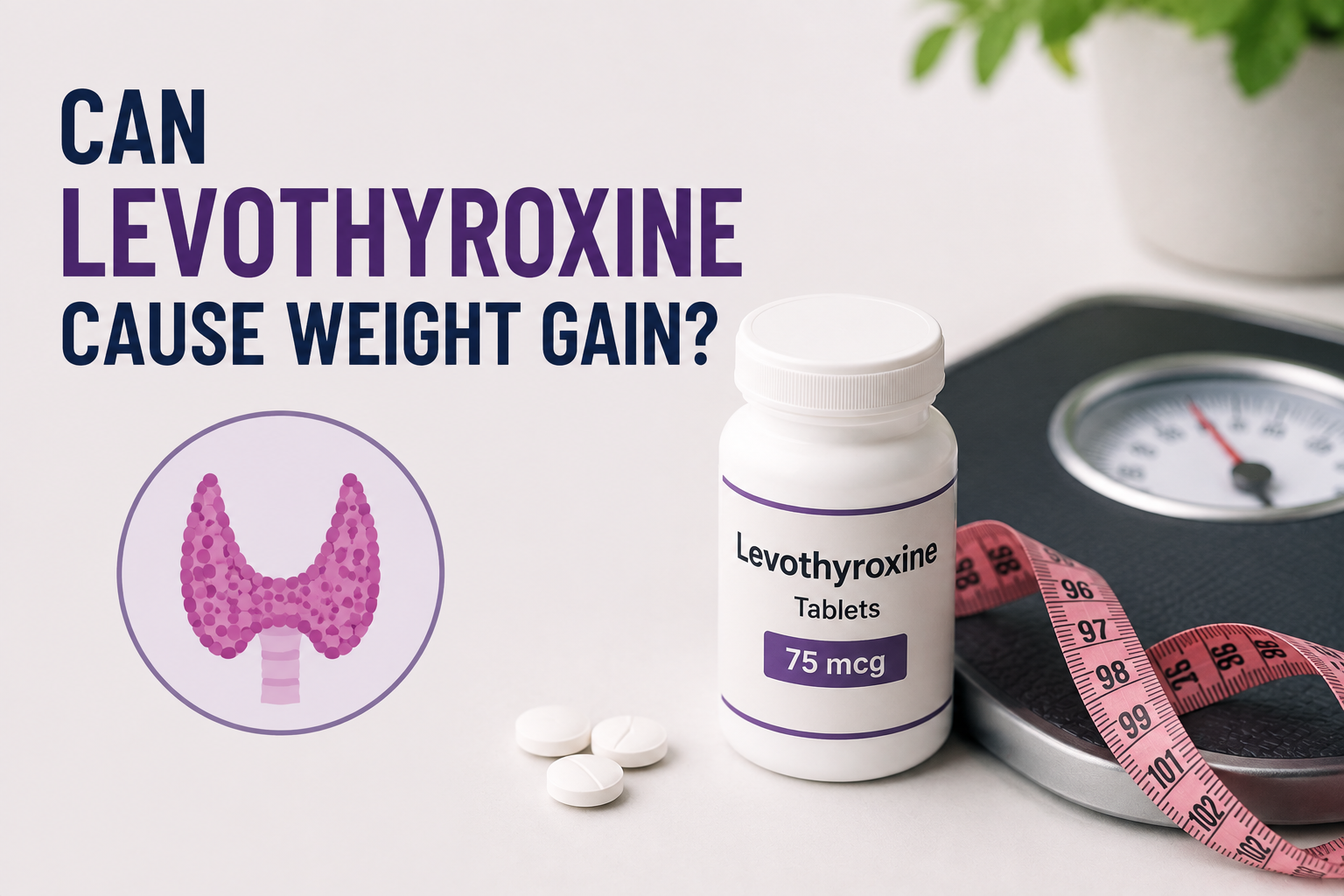
A five-checkpoint guide to figuring out what the scale is really telling you
| THE ANSWER IN ONE SENTENCE
Levothyroxine is not expected to directly cause fat gain, but weight can rise after treatment if the dose is too low, absorption is inconsistent, the body is recovering from hyperthyroidism, fluid is shifting, or another health factor is involved. |
Seeing the scale move upward after starting thyroid medicine can make it feel as though the prescription is responsible. In most cases, however, the better question is not simply can levothyroxine cause weight gain? It is: Is your body receiving and using the right amount of thyroid hormone consistently, and is something else contributing to the change?
Levothyroxine replaces thyroxine, or T4, when the thyroid cannot make enough. Correct treatment brings thyroid hormone levels back toward the target range. It is not a weight-loss drug, and taking extra medication to force weight loss can cause dangerous heart, bone, and nervous-system effects.
Key Takeaways
- Levothyroxine itself is not a typical cause of body-fat gain. Ongoing gain more often points to undertreated hypothyroidism, inconsistent absorption, recovery from a previously overactive thyroid, fluid retention, or a separate cause.
- A dose that worked months ago may need review after a major weight change, pregnancy, menopause, a new medication, gastrointestinal illness, or a switch in product or routine.
- Take levothyroxine consistently on an empty stomach and separate it from calcium, iron, and certain other products that reduce absorption.
- TSH is usually rechecked about 6 to 8 weeks after a dose change because thyroid levels do not stabilize immediately.
- Do not increase your dose for weight control. Too much thyroid hormone can trigger palpitations, abnormal heart rhythms, bone loss, anxiety, tremor, and muscle loss.
Start With the Timeline: When Did the Weight Change Begin?
The timing of the gain often provides more useful information than the number on the scale. A few pounds during the first weeks of treatment may reflect changing fluid balance, a return of appetite, reduced calorie needs after treatment for hyperthyroidism, constipation, or ordinary day-to-day variation. A steady upward trend over several months deserves a broader review.
| WHEN IT STARTED | WHAT IT MAY SUGGEST |
| Before levothyroxine | Weight gain may be part of untreated hypothyroidism, especially when it occurs with fatigue, cold intolerance, constipation, dry skin, or menstrual changes. |
| Within the first few weeks | The dose may not yet be fully adjusted. Symptoms can take several weeks to improve, and lab testing is usually needed before conclusions are made. |
| After a dose or product change | Different timing, food habits, supplements, medications, or inconsistent absorption can shift TSH even when the labeled dose looks similar. |
| After treatment for hyperthyroidism | Weight that was lost during an overactive-thyroid phase may return when metabolism normalizes. Appetite habits may take longer to readjust. |
| Months after stable labs | Consider sleep, menopause, medications, depression, reduced activity, insulin resistance, diet changes, and other causes rather than assuming the thyroid is solely responsible. |
The Five-Checkpoint Weight-Gain Investigation
| 1 | Is the thyroid still undertreated?
If TSH remains above the target range in primary hypothyroidism, your body may still be receiving too little thyroid hormone. Persistent fatigue, constipation, cold intolerance, dry skin, slowed thinking, or swelling can support the need for reassessment, but symptoms alone cannot determine the dose. Blood tests are essential. |
The National Institute of Diabetes and Digestive and Kidney Diseases notes that fatigue and weight gain are common but nonspecific symptoms. They can occur for many reasons, which is why hypothyroidism and treatment response are confirmed with thyroid blood tests rather than symptoms alone. A clinician commonly checks TSH about 6 to 8 weeks after treatment begins or a dose changes.
| 2 | Is the medication being absorbed consistently?
Even a carefully chosen dose may act like a lower dose when it is taken with food, coffee, calcium, iron, antacids, certain cholesterol medicines, or other products that interfere with absorption. The issue is often inconsistency rather than one specific breakfast or supplement. |
For tablets, current U.S. prescribing information recommends taking levothyroxine as one daily dose on an empty stomach, 30 to 60 minutes before breakfast. Calcium and iron should generally be separated by at least four hours. Consistency matters: changing from a fasting routine to taking the pill with breakfast can change how much medication reaches the bloodstream.
- Use the same timing every day whenever possible.
- Tell your clinician about calcium, iron, multivitamins, antacids, acid-suppressing drugs, fiber supplements, biotin, and weight-loss medicines.
- Do not double doses or alter the schedule without instructions from your prescriber or pharmacist.
- If swallowing, digestive disease, or absorption is a concern, ask whether another formulation or a supervised timing change is appropriate.
| 3 | Did treatment correct an overactive thyroid?
Some people take levothyroxine after radioactive iodine, thyroid surgery, or another treatment for hyperthyroidism. In that situation, the body is moving from an abnormally fast metabolic state toward normal. Weight loss caused by excess thyroid hormone often reverses, and the same food intake may now exceed energy needs. |
This is not the same as levothyroxine creating fat gain. It is often a normalization effect. The American Thyroid Association explains that people treated for hyperthyroidism can regain weight because the calorie-burning effect of excess thyroid hormone ends while appetite and eating patterns may remain elevated for a time.
| 4 | Is the scale measuring fluid rather than fat?
Hypothyroidism can increase salt and water retention. Menstrual cycles, high-sodium meals, constipation, heat, travel, and some medications can also shift water weight. A rapid increase over a few days is more likely to involve fluid than new body fat, although sudden swelling still needs medical attention. |
The American Thyroid Association estimates that about 5 to 10 pounds may be related to hypothyroidism for many patients, with much of that change coming from retained salt and water. After thyroid levels normalize, any remaining long-term weight concern may need to be approached in the same way it would be for someone without thyroid disease.
| 5 | Could another condition or medication be involved?
Once TSH is in range and other thyroid symptoms improve, persistent weight gain is less likely to be explained by the thyroid alone. A full review may uncover reduced sleep, menopause, polycystic ovary syndrome, depression, chronic pain, sleep apnea, diabetes risk, fluid-retaining disease, or a medication effect. |
Medicines that can contribute to weight gain include some antidepressants, antipsychotics, seizure medicines, diabetes treatments, steroids, and certain blood-pressure drugs. Do not stop a prescription suddenly. Ask the prescriber whether the timing of the weight change fits the medication and whether a safer alternative is available.
What Lab Results Matter?
For most adults with primary hypothyroidism, TSH is the main test used to adjust levothyroxine. Free T4 may also be checked, particularly when symptoms and TSH do not match, during pregnancy, or when pituitary disease is possible. The correct target is individualized by age, pregnancy status, heart health, thyroid-cancer history, and the reason levothyroxine was prescribed.
| TSH HIGH
Often suggests too little thyroid replacement in primary hypothyroidism, but missed doses and poor absorption can also be responsible. |
TSH IN RANGE
Makes thyroid-only weight gain less likely. The exact target still depends on the person and clinical context. |
TSH LOW
May signal excessive replacement. Weight loss is not a safe goal when it comes with heart, bone, muscle, or nervous-system risk. |
Can Taking Too Much Levothyroxine Help With Weight Loss?
No. Levothyroxine should not be increased to treat obesity or speed up weight loss. The FDA-approved prescribing information carries a boxed warning that thyroid hormones should not be used for weight reduction in people with normal thyroid function. Higher-than-needed doses can cause serious or life-threatening toxicity.
Signs of excessive thyroid hormone can include a racing or irregular heartbeat, chest pain, sweating, tremor, anxiety, insomnia, diarrhea, heat intolerance, muscle weakness, and unexplained weight loss. Long-term over-replacement can raise the risk of atrial fibrillation and lower bone density, especially in older adults and postmenopausal women.
A Practical Appointment Checklist
Bring more than a single weight number to your next visit. A short, organized record can help your clinician decide whether the issue is dose, absorption, fluid, or something unrelated to the thyroid.
- Your current levothyroxine dose, brand or manufacturer, and the date of any change.
- The exact time you take it and how long you wait before eating or drinking coffee.
- All prescriptions, over-the-counter medicines, antacids, vitamins, iron, calcium, fiber, biotin, and supplements.
- Recent TSH and free T4 results, including the dates and reference ranges.
- A simple weekly weight trend, not repeated daily measurements taken at different times.
- Symptoms such as constipation, cold intolerance, swelling, palpitations, menstrual changes, snoring, sleepiness, or mood changes.
- Major life changes, including pregnancy, menopause, surgery, illness, reduced activity, or changes in eating patterns.
How Can You Manage Weight Safely While Taking Levothyroxine?
First, make sure thyroid replacement is appropriate and consistent. Then use a weight-management plan that does not depend on raising thyroid hormone above the normal range. A modest calorie deficit, protein and fiber at meals, resistance training, regular walking or other aerobic activity, sufficient sleep, and treatment of sleep apnea or depression can all matter.
Avoid crash diets and unregulated thyroid or metabolism supplements. Some contain stimulants, iodine, or thyroid-active ingredients that can interfere with treatment or cause harm. If weight gain is substantial or accompanied by diabetes risk, high blood pressure, fatty liver disease, or sleep apnea, ask about evidence-based obesity treatment. That may include structured nutrition support, behavioral care, approved medication, or bariatric evaluation when appropriate.
When Should You Contact a Clinician Promptly?
- You gained weight steadily while fatigue, constipation, cold intolerance, or swelling returned.
- Your dose, brand, supplement routine, or eating schedule changed and symptoms followed.
- You are pregnant, planning pregnancy, or recently delivered. Levothyroxine needs often change during and after pregnancy.
- You have new palpitations, tremor, chest pain, shortness of breath, severe anxiety, or unexplained rapid weight loss.
- You have rapid swelling, difficulty breathing, confusion, fainting, or severe weakness. These symptoms require urgent assessment.
Frequently Asked Questions
Why am I gaining weight even though my TSH is normal?
A normal TSH makes untreated primary hypothyroidism less likely to be the sole explanation. Weight can still change because of diet, sleep, menopause, activity level, medications, insulin resistance, depression, fluid retention, or another condition. Your clinician may review the TSH target, free T4, symptoms, and broader health picture.
Will levothyroxine make me lose the weight caused by hypothyroidism?
Some people lose a modest amount, particularly retained fluid, after hormone levels normalize. Others see little scale change. Thyroid treatment restores normal hormone levels; it does not create the large calorie-burning effect seen with hyperthyroidism.
Can switching between generic manufacturers affect my weight?
A switch does not directly create fat gain, but changes in formulation, administration, or absorption may affect thyroid levels in a sensitive patient. Keep track of product changes and ask whether repeat testing is needed if symptoms return.
Should I take levothyroxine at night instead?
Some people can use a consistent bedtime schedule when the stomach has been empty for several hours, but the change should be discussed with a clinician or pharmacist. Consistency is more important than choosing morning or night on your own, and thyroid testing may be needed after a major routine change.
Does weight loss mean my dose should automatically decrease?
Not automatically, but a substantial change in body weight can affect dose needs. Do not adjust the prescription yourself. Your clinician can use symptoms and lab results to decide whether the dose remains appropriate.
The Bottom Line
For most people, the answer to can levothyroxine cause weight gain is that the medicine is not a direct cause of fat gain. A rising weight trend is more likely to reflect too little effective thyroid hormone, inconsistent absorption, recovery from hyperthyroidism, water retention, or another health or lifestyle factor.
The safest next step is not to take more levothyroxine. Review the timeline, administration routine, medications and supplements, symptoms, and thyroid blood tests with a healthcare professional. Once thyroid levels are stable, weight management should be individualized just as it would be for anyone else.
Authoritative U.S. Resources
| American Thyroid Association: Thyroid and Weight NIDDK: Hypothyroidism (Underactive Thyroid) DailyMed: Levothyroxine Sodium Prescribing Information |
Medical note: This article is for general educational purposes and does not replace diagnosis or treatment from a qualified healthcare professional. Never change or stop levothyroxine without medical guidance.