The best topical treatment depends on plaque thickness, body location, age, severity, and whether you need short-term flare control or long-term maintenance.
| Medical note: Psoriasis is a chronic immune-mediated disease. This article explains commonly used U.S. topical options, but it cannot tell you which prescription strength is safe for your skin. Face, groin, skin folds, children, pregnancy, large body areas, and severe flares need extra care. |
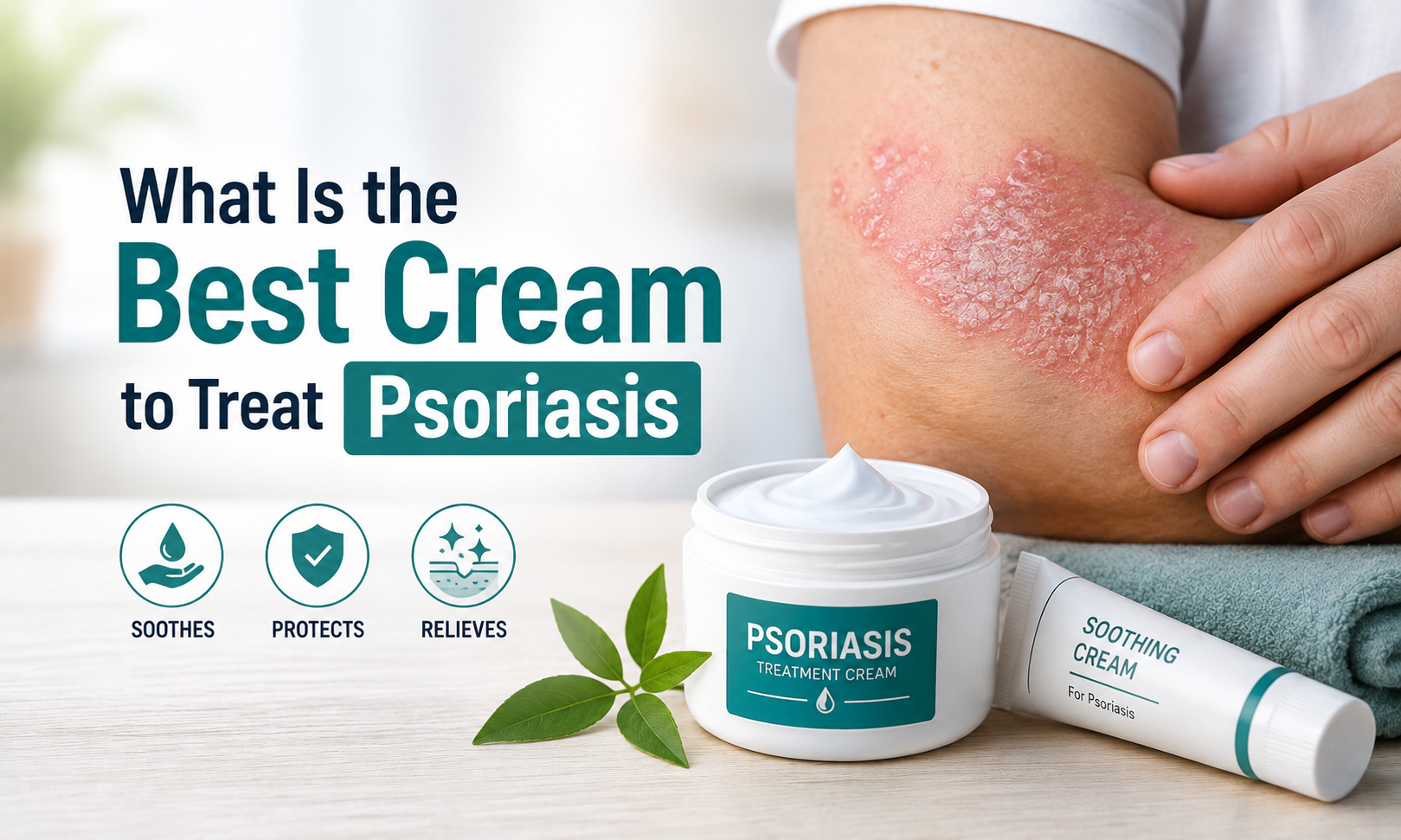
If you are standing in a U.S. drugstore wondering What Is the Best Cream to Treat Psoriasis, the answer is less about finding one magic tube and more about matching the product to the type of psoriasis in front of you. A thick plaque on an elbow needs a different strategy from a thin red patch on the eyelid, groin, or under a breast.
For a few small, mild plaques, over-the-counter hydrocortisone can reduce inflammation and itch, while a thick fragrance-free cream or ointment helps repair the dry, scaly skin barrier. Salicylic acid can loosen stubborn scale, and coal tar remains an option for some people. When psoriasis is thicker, persistent, widespread, or located in a sensitive area, prescription treatment is often more effective and safer than repeatedly experimenting with OTC products.
In 2026, U.S. topical psoriasis treatment also includes newer steroid-free prescription choices. That matters because long-term management often requires balancing effectiveness with the risk of steroid side effects in areas where skin is thin.
Key Takeaways
- There is no single best psoriasis cream for everyone. Body location and severity determine what is safest and most effective.
- For a few small mild plaques, OTC hydrocortisone can be reasonable for short-term symptom control, and a heavy fragrance-free moisturizer is useful for nearly everyone with psoriasis.
- Prescription topical corticosteroids remain a core treatment for plaque psoriasis on thicker skin, especially the trunk, arms, legs, elbows, and knees, but potency and duration should be chosen carefully.
- Steroid-free prescription options include vitamin D analogs, tapinarof, roflumilast, tazarotene, and off-label calcineurin inhibitors in selected areas.
- In June 2026, the U.S. prescribing information for roflumilast cream 0.3% expanded plaque-psoriasis use to adults and children age 2 and older, including intertriginous areas such as skin folds.
- If topical treatment is failing, if psoriasis covers a large area, or if you have joint pain, stiffness, or swelling, a dermatologist may need to consider phototherapy or systemic treatment rather than simply prescribing a stronger cream.
So, What Is the Best Cream for Psoriasis?
For most adults with localized plaque psoriasis on the body, a prescription topical corticosteroid is often the fastest and most effective first-line cream or ointment. The exact steroid strength depends on where the plaque is and how thick it is. For delicate sites such as the face, genitals, and skin folds, stronger steroids can cause problems, so dermatologists often use weaker steroids for short periods or switch to steroid-sparing medicines.
If your psoriasis is very mild and limited to a few patches, OTC hydrocortisone may be enough to reduce itch and inflammation. It is not usually strong enough for thick, established plaques on elbows, knees, hands, or feet. A moisturizer should be used alongside treatment because it reduces dryness and scaling, but moisturizer by itself usually does not control the underlying inflammation well enough to clear active psoriasis.
Which Cream Fits Which Situation?
| Situation | Common starting option | Why it may fit | Important caution |
| A few small, mild plaques | OTC hydrocortisone plus thick moisturizer | Can reduce itch and inflammation without a prescription | Often too weak for thick or persistent plaques |
| Thick plaques on elbows, knees, trunk, arms, or legs | Prescription topical corticosteroid, sometimes with vitamin D analog | Stronger anti-inflammatory effect and better plaque control | Potency and duration matter because long-term overuse can thin skin |
| Face, eyelids, groin, or skin folds | Short course of low-potency steroid or a steroid-sparing prescription option | Sensitive skin needs lower-risk long-term strategies | Do not use a strong body steroid here unless specifically instructed |
| Very scaly plaques | Salicylic acid as an adjunct | Softens scale so other medication can reach the skin better | Too much can irritate and dry the skin |
| Need a steroid-free prescription cream | Roflumilast or tapinarof when appropriate | Once-daily nonsteroidal options can reduce inflammatory plaques | Prescription eligibility, age, medical history, and insurance coverage vary |
| Scalp psoriasis | Foam, solution, shampoo, or scalp-specific topical rather than a body cream | Formulation can reach the scalp through hair more easily | A thick cream is often inconvenient and may not reach the skin well |
| Large body area or frequent recurrence | Dermatology evaluation for broader therapy | Topicals alone may be unrealistic or insufficient | Moderate to severe psoriasis may need phototherapy, oral medicine, or biologic treatment |
What Is the Best Over-the-Counter Cream for Psoriasis?
For mild psoriasis, the most useful OTC choices are not all doing the same job. Hydrocortisone targets inflammation. Moisturizers improve the damaged skin barrier. Salicylic acid loosens scale. Coal tar can reduce scaling, itch, and inflammation. The best OTC routine may combine more than one role rather than relying on one product.
Is OTC Hydrocortisone the Best First Cream for Mild Psoriasis?
For a few small plaques, it can be. OTC hydrocortisone is a mild corticosteroid. The American Academy of Dermatology notes that mild hydrocortisone can work well for a few small patches and that people with more than a few patches will often need a prescription corticosteroid for meaningful results.
Hydrocortisone tends to be most useful for short-term itch and redness control. It is less likely to flatten a thick plaque than a stronger prescription steroid. Avoid treating large areas for long periods without medical advice, and be especially cautious on the face, groin, armpits, and other thin-skin areas.
Why Is a Thick Moisturizer Part of Psoriasis Treatment?
Psoriasis plaques lose water easily and develop scale, cracking, and itch. A thick fragrance-free cream or ointment traps moisture in the skin and can make plaques feel less tight and painful. It also makes medicated treatment easier to tolerate. For most people with psoriasis, moisturizer is not an optional cosmetic step. It is supportive treatment.
Look for a product that is fragrance-free and thick enough to stay on the skin. Ointments are often better for cracked, very dry plaques because they contain more oil and fewer potentially stinging ingredients than many lotions. Apply moisturizer after bathing or handwashing while the skin is still slightly damp.
When Does Salicylic Acid Help Psoriasis?
Salicylic acid is a keratolytic, meaning it helps break apart and remove excess scale. It can be useful on thick plaques and on the scalp. By reducing scale, it may also help a prescription medicine penetrate more effectively.
More is not better. Excess salicylic acid can dry and irritate psoriasis. Children, pregnancy, large treatment areas, and broken skin require extra caution, so ask a clinician before using it broadly.
Does Coal Tar Still Work for Psoriasis in 2026?
Coal tar is old-fashioned, but it has not disappeared because it can still reduce itch, inflammation, and scale in some people. It is available in creams, ointments, shampoos, and bath products. The downsides are odor, staining, messiness, irritation, and less predictable cosmetic acceptability than newer treatments.
Coal tar makes the most sense when a person tolerates it and prefers an inexpensive OTC approach. It is not automatically better than hydrocortisone, and many people with established plaque psoriasis eventually need a prescription regimen.
What Prescription Creams Work Best for Plaque Psoriasis?
Prescription topicals are usually selected by potency, body site, plaque thickness, age, other health conditions, and how long treatment is expected to continue. A dermatologist may deliberately use one medicine to calm a flare and another to maintain control afterward.
Why Are Topical Corticosteroids Still a Mainstay?
Topical corticosteroids suppress inflammation quickly and remain a central treatment for plaque psoriasis outside sensitive skin folds. Stronger formulations are often used on thick plaques of the elbows, knees, hands, feet, trunk, arms, or legs. Weaker formulations are chosen for thinner skin and shorter courses.
The advantage is speed and effectiveness. The tradeoff is that incorrect long-term use can cause skin thinning, stretch marks, visible small blood vessels, easy bruising, and other local effects. Using a potent steroid over large areas, under occlusion, or for prolonged periods can also increase systemic absorption. That is why the right steroid is not simply the strongest one available.
When Are Vitamin D Creams or Combination Products Useful?
Synthetic vitamin D medicines such as calcipotriene can slow abnormal skin-cell growth and are frequently used as steroid-sparing treatment. They may be prescribed alone or combined with a topical steroid. Combination treatment can improve effectiveness while reducing the amount of time a strong steroid is needed.
Vitamin D analogs can irritate the skin, especially in sensitive areas, and excessive use can disturb calcium balance. Follow the prescribed amount rather than treating every dry patch as psoriasis.
What Is Roflumilast Cream, and Why Is It Important in 2026?
Roflumilast is a steroid-free phosphodiesterase-4 inhibitor. The current U.S. prescribing information for roflumilast cream 0.3% includes plaque psoriasis, including intertriginous areas, in adults and children age 2 and older. It is applied once daily.
This makes it notable for people who need a nonsteroidal option or who have psoriasis in folds where chronic steroid exposure can be difficult. It is still a prescription medicine, not a general moisturizer, and it has contraindications and drug-interaction considerations. The current label lists moderate to severe liver impairment as a contraindication.
What Is Tapinarof Cream?
Tapinarof 1% cream is another once-daily steroid-free prescription option. In the United States, its plaque-psoriasis indication is for adults. It works through the aryl hydrocarbon receptor pathway and can be used without the same skin-thinning concern associated with topical corticosteroids.
Common adverse effects in plaque-psoriasis trials included folliculitis, nasopharyngitis, contact dermatitis, headache, itch, and influenza. For pediatric plaque psoriasis, its safety and effectiveness have not been established under the current U.S. label, even though the same medicine also has a separate atopic-dermatitis indication in children age 2 and older.
What About Tacrolimus or Pimecrolimus for Psoriasis?
Tacrolimus ointment and pimecrolimus cream are topical calcineurin inhibitors. They are FDA-approved for atopic dermatitis, not psoriasis, but dermatologists sometimes prescribe them off-label for psoriasis on the face, genitals, and body folds. Their biggest advantage is that they do not cause the same steroid-related skin thinning.
They can sting or burn when first applied, especially on inflamed skin. Because they are off-label for psoriasis, the decision should come from a clinician who has confirmed the diagnosis and understands the treatment area.
Where Does Tazarotene Fit?
Tazarotene is a topical retinoid that slows abnormal skin-cell growth. It can help reduce plaque thickness and scale and may be combined with a corticosteroid to improve tolerability and effectiveness. Irritation is common, and retinoids require special pregnancy precautions, so this is not a product to add casually to an OTC routine.
Does the Best Psoriasis Cream Change by Body Area?
Yes. Location can matter as much as severity because the skin on the eyelids, groin, and folds absorbs medicine differently from the thick skin of the palms, soles, elbows, and knees.
Elbows and knees: Often tolerate a stronger prescription topical steroid for limited courses; thick plaques may also benefit from scale-softening treatment.
Face and eyelids: Usually require lower-potency or steroid-sparing treatment because the skin is thin and side effects develop more easily.
Groin and genitals: Use only products intended for sensitive skin and follow a clinician-directed plan. Strong body steroids are usually avoided unless specifically prescribed for a short course.
Armpits and under breasts: Inverse psoriasis often responds to low-potency steroids for short periods or steroid-sparing options such as roflumilast or off-label calcineurin inhibitors when appropriate.
Hands and feet: Plaques can be thick and resistant, so stronger topicals may be needed. Cracks can sting with some creams, making ointments easier to tolerate.
Scalp: Foams, solutions, oils, and medicated shampoos are often more practical than creams because they can reach the scalp through hair.
Nails: Topicals can help mild nail psoriasis but work slowly because nails grow slowly. A dermatologist may use potent steroids, vitamin D analogs, or tazarotene, and treatment may take months.
Is a Cream Better Than an Ointment for Psoriasis?
Not necessarily. The vehicle can affect comfort and adherence as much as the active ingredient. Ointments are greasier but more occlusive, which can make them better for very dry, thick, cracked plaques. Creams absorb faster and are often easier to use during the day. Foams and solutions can be better for hairy areas such as the scalp.
A treatment that works biologically but is too messy to use consistently may fail in real life. If you stop a medication because of texture, smell, staining, or burning, tell your clinician. There may be another formulation with the same or a similar active ingredient.
What Creams Should You Avoid Using Without a Clear Diagnosis?
Do not assume every red, scaly rash is psoriasis. Fungal infections, eczema, seborrheic dermatitis, contact dermatitis, cutaneous lupus, and several other conditions can look similar. A steroid can temporarily change the appearance of a fungal infection and make it harder to recognize. If the rash is new, rapidly spreading, painful, blistering, oozing, infected-looking, or not behaving like your usual psoriasis, get it checked.
Be cautious with heavily fragranced products, essential oils, aggressive exfoliating acids, and products marketed as natural cures. Irritation itself can trigger or worsen psoriasis in some people. If a product burns intensely, causes swelling, or creates a new rash, stop using it and seek medical advice if the reaction is significant.
How Do You Know When OTC Cream Is Not Enough?
OTC treatment is most realistic for very mild, limited psoriasis. You should consider a dermatology visit when any of the following apply:
- You have more than a few plaques or the plaques are thick and persistent.
- Psoriasis affects the face, genitals, palms, soles, nails, or large skin folds.
- You are treating a child, are pregnant, are breastfeeding, or have significant liver disease or other medical conditions.
- You need hydrocortisone repeatedly but the rash returns as soon as you stop.
- The diagnosis has never been confirmed, or the rash looks different from your usual psoriasis.
- The skin is cracking, bleeding, painful, infected-looking, or interfering with sleep or daily activities.
- You have joint pain, morning stiffness, swollen fingers or toes, heel pain, or other symptoms that could suggest psoriatic arthritis.
- Psoriasis covers a large portion of the body or is causing major quality-of-life impairment.
When psoriasis is moderate to severe, topical treatment alone may be impractical. Phototherapy, oral systemic drugs, injectable biologics, or a combination approach may provide better disease control.
How Can You Get Better Results From a Psoriasis Cream?
- Apply medication only to the areas your clinician or product label directs. More medicine is not automatically more effective.
- Use lukewarm rather than hot water, because hot water can worsen dryness and itch.
- Moisturize soon after bathing or washing to trap water in the skin.
- Do not cover a potent steroid with plastic wrap or another occlusive dressing unless a clinician specifically tells you to do so.
- Use the correct formulation for the body area. Creams, ointments, foams, solutions, and shampoos behave differently.
- Give prescription topicals the planned trial period unless you develop an adverse reaction. Psoriasis treatment often requires consistency rather than changing products every few days.
- Take photos at the start and after several weeks under similar lighting. It can be easier to judge improvement when you compare side by side.
Questions People Commonly Ask About Psoriasis Creams
Can OTC hydrocortisone clear psoriasis completely?
It may calm a few small mild patches, but many plaques are too thick or inflammatory for OTC-strength hydrocortisone to clear fully. If you repeatedly need it or see little improvement, a prescription plan is more appropriate.
Is Vaseline good for psoriasis?
Plain petrolatum is not an anti-inflammatory psoriasis drug, but it is an effective occlusive moisturizer. It can soften scale, reduce cracking, and protect dry plaques. It is especially useful as supportive skin care alongside a medicated treatment.
What is the best cream for psoriasis on the face?
There is no universal best facial treatment. Dermatologists commonly use a very mild steroid for short courses or a steroid-sparing prescription option because facial skin is thin. Strong body steroids should not be moved to the face without specific instructions.
What is the best cream for psoriasis in skin folds?
Inverse psoriasis often needs a treatment that is effective without prolonged strong-steroid exposure. Depending on age and medical history, a clinician may use a low-potency steroid briefly, roflumilast, or an off-label topical calcineurin inhibitor.
Are psoriasis creams safe to use every day?
Some are designed for daily long-term use, while others are intended for short courses. The answer depends on the active ingredient, potency, treatment area, amount used, age, and medical history. Follow the label or dermatologist instructions for the specific product.
What if the cream stops working?
The plaque may be too thick, the diagnosis may be wrong, the treatment may not be strong enough, or the disease may have progressed beyond what topicals can reasonably control. A dermatologist can adjust the formulation, combine therapies, or consider phototherapy or systemic treatment.
Can psoriasis cream treat psoriatic arthritis?
No. Skin creams do not adequately treat inflammation inside joints. Joint pain, stiffness, swelling, or tendon pain needs medical evaluation because untreated psoriatic arthritis can cause permanent joint damage.
What is the newest important topical update for 2026?
One notable U.S. change is the June 2026 label expansion for roflumilast cream 0.3%, which now includes plaque psoriasis in patients age 2 and older, including intertriginous areas. The best choice still depends on the patient rather than on which drug is newest.
Trusted U.S. Resources
For evidence-based OTC ingredient guidance, see the American Academy of Dermatology overview of nonprescription psoriasis treatments.
For clinical guidance on topical therapy, see the American Academy of Dermatology psoriasis clinical guideline.
For the latest U.S. prescribing details on roflumilast cream, see the FDA-approved ZORYVE prescribing information revised June 2026.
The Bottom Line
If you want a simple answer, the best OTC starting cream for a few small mild psoriasis patches is often a short course of OTC hydrocortisone paired with a thick fragrance-free moisturizer. For thick, persistent body plaques, a prescription topical corticosteroid is usually more effective, sometimes combined with a vitamin D analog or another steroid-sparing agent.
For the face, genitals, folds, children, or long-term maintenance, the best cream may be a lower-potency steroid or a steroid-free prescription option rather than the strongest steroid available. In 2026, newer nonsteroidal choices have expanded what dermatologists can use, but the best treatment still depends on where the psoriasis is, how much skin is involved, and what has already been tried.
If psoriasis is widespread, keeps returning despite appropriate topical treatment, or is accompanied by joint symptoms, the next step should be a dermatologist evaluation rather than simply buying a stronger cream.
Editorial Note
This article is for educational purposes and is not a diagnosis or personal treatment plan. Drug indications, age ranges, and safety information can change. A licensed U.S. clinician or pharmacist can help confirm which topical product and strength are appropriate for you.